

Letölthető szókártya-sorozat

a 150 leggyakoribb angol ige 364 alapjelentése
a leggyakoribb szókapcsolatokkal, könnyen megtanulható, több mint
1000 élőnyelvi mondatban bemutatva.
1000 élőnyelvi mondatban bemutatva.
Ha megosztod ezt a bejegyzést a fészbukon, ráadásul

21. each other
segítség a nyelvtanhoz:
* to + főnévi igenév_mondatok
* egymást stb._mondatok
* kiemelés a mondatban_mondatok
20. his mouth
segítség a nyelvtanhoz:
* képes, tud_mondatok
* feltételes mód (videó)
* feltételes mód_mondatok
* jónak tartom_mondatok
* eléggé és túl_mondatok
17. beaten up
segítség a nyelvtanhoz:
* felszólítás (videó) * felszólítás_mondatok
* szenvedő szerkezet_mondatok
* látja jönni, látja megjönni_mondatok
13. Henry
segítség a nyelvtanhoz:
* függő felszólítás (videó)
* függő felszólítás_mondatok
* inkább (videó)
* inkább_mondatok
* még, még más, máskülönben_mondatok
11. where else to play
segítség a nyelvtanhoz:
* képes, tud_mondatok
* to + főnévi igenév_mondatok
* mint, ahogy_mondatok
* még, még más, máskülönben_mondatok
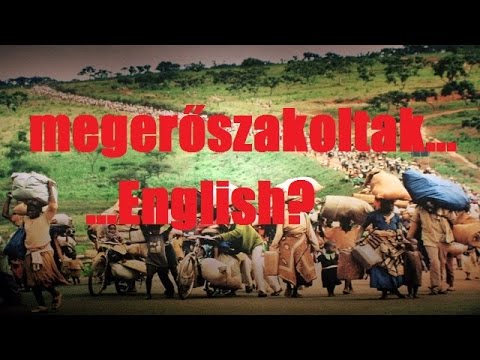
10. refugee

Vajon mit válaszolt Khalid Szíriából?... a fordítás nem nehéz: a gyakori szavakat nyilván ismered, a nyelvtan az Off Course Angol videó után csekélység :)
segítség a nyelvtanhoz:
* becsomagoljam? (videó)
* becsomagoljam?_mondatok
Wikipedia: A
refugee, generally speaking, is a displaced person who has been
forced to cross national boundaries and who cannot return home safely
(for more detail see legal definition). Such a person may be called
an asylum seeker until granted refugee status by the contracting
state or the UNHCR if they formally make a claim for asylum.
Refugee
crisis
Refugee
crisis can refer to movements of large groups of displaced persons,
who could be either internally displaced persons, refugees or other
migrants. It can also refer to incidents in the country of origin or
departure, to large problems whilst on the move or even after arrival
in a safe country that involve large groups of displaced persons.
Back
in 2006, there were 8.4 million UNHCR registered refugees worldwide,
which was the lowest number since 1980. At the end of 2015, there
were 16.1 million refugees worldwide. When adding the 5.2 million
Palestinian refugees who are under UNRWA's mandate there are 21.3
million refugees worldwide. The overall forced displacement worldwide
has reached to a total of 65.3 million displaced persons in the end
of 2015, while it was 59.5 million 12 months earlier. One in every
113 people globally is an asylum seeker or a refugee. In 2015, the
total number of displaced people worldwide, including refugees,
asylum seekers and internally displaced persons, was at its highest
level on record.
Among them, Syrian refugees were
the largest group in 2015 at 4.9 million. In 2014, Syrians had
overtaken Afghan refugees (2.7 million), who had been the largest
refugee group for three decades. Somalis were the third largest group
with one million. The countries hosting the largest number of
refugees according to UNHCR are Turkey (2.5 million), Pakistan (1.6
million), Lebanon (1.1 million) and Iran (1 million). As for the
countries that have the largest numbers of internally displaced
people are Colombia at 6.9, Syria at 6.6 million and Iraq at 4.4
million.
Children formed a 51% of
refugees in 2015 and most of them were separated from their parents
or travelling alone. 86 per cent of the refugees under UNHCR's
mandate in 2015 were in low- and middle-income countries that
themselves are close to situations of conflict. Research has found
that refugees have historically tended to flee to nearby countries
with ethnic kin populations and a history of accepting other
co-ethnic refugees. The religious, sectarian and denominational
affiliation has been an important feature of debate in
refugee-hosting nations.
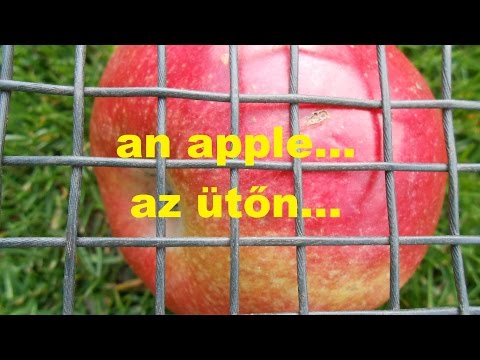
8. bath toys
...vajon
mi hiányzik? (te még emlékszel?) – a fordítás könnyű, csak
szavakkal segítek :)
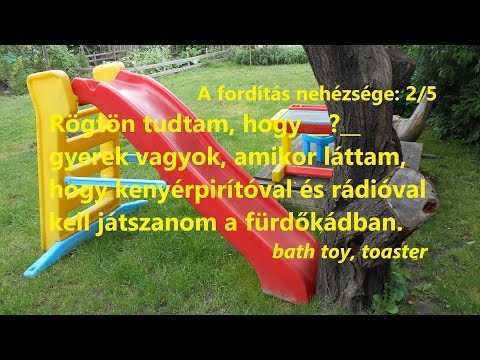
segítség a nyelvtanhoz:
* igeidők (videó)
* időegyeztetés (videó)
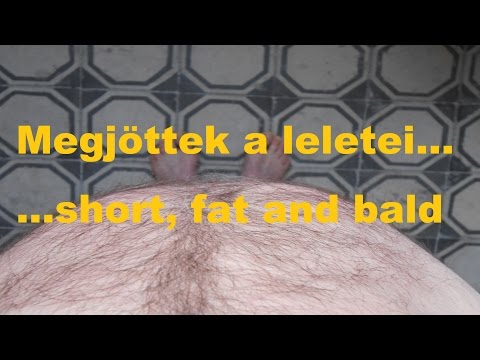
5. immigrants
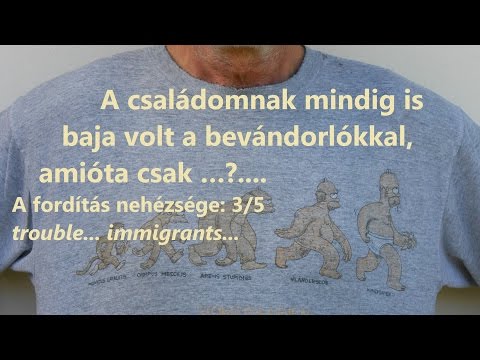
nyilván pontosan tudod, mióta?...
vigyázz, a fordítás könnyűnek tűnhet, de... nem lehet, hogy túlértékeled magad?
segítség a nyelvtanhoz:
* igeidők (videó)
Wikipedia: E.Y. "Yip" Harburg was born Isidore Hochberg to Jewish immigrant parents on the lower east side of New York City on April 8, 1898. He was nicknamed "Yipsel" (Yiddish for squirrel) for his constant clowning and unbounded energy. Faithful Orthodox Jews, his parents immersed Harburg in the positive aspects of the world around him, including the arts. Yiddish theater had a profound effect upon him; the deft blending of humor, fantasy and social commentary left an indelible mark on his own work. He worked at many jobs while growing up, including putting pickles in jars at a small pickle factory, selling newspapers, and lighting street lamps along the docks of the East River.” He attended high school at Townsend Harris Hall, an experimental school for talented children, where he worked on the school newspaper with fellow student Ira Gershwin.

...The team's pinnacle came in 1939, when they wrote the score for the movie he Wizard of Oz, which Harburg approached as a Depression fantasy. Songs from it included "Over the Rainbow," "Ding, Dong! The Witch is Dead," and "We're Off to See the Wizard."...
...Harburg once said, "I am one of the last of a small tribe of troubadours who still believe that life is a beautiful and exciting journey with a purpose and grace which are well worth singing about." Harburg died in a car accident in Los Angeles, California on March 5, 1981.
Feliratkozás:
Bejegyzések
(
Atom
)