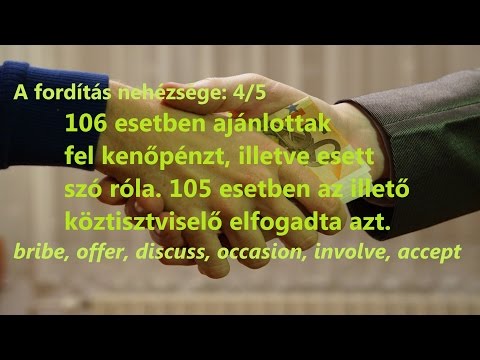
172. bribe

nyilván sejted, melyik országról van szó?... a fordítás csapdás, csak akkor állj neki, ha elég/túl nagy az önbizalmad :)


 segítség a nyelvtanhoz:
  * igeidők (videó)
  * igeneves szerkezetek_mondatok

Wikipedia: Many types of payments or favors can constitute bribes: tip, gift, sop, perk, skim, favor, discount, waived fee/ticket, free food, free ad, free trip, free tickets, sweetheart deal, kickback/payback, funding, inflated sale of an object or property, lucrative contract, donation, campaign contribution, fundraiser, sponsorship/backing, higher paying job, stock options, secret commission, or promotion (rise of position/rank).
One must be careful of differing social and cultural norms when examining bribery. Expectations of when a monetary transaction is appropriate can differ from place to place. Political campaign contributions in the form of cash, for example, are considered criminal acts of bribery in some countries, while in the United States, provided they adhere to election law, are legal. Tipping, for example, is considered bribery in some societies, while in others the two concepts may not be interchangeable.
In some Spanish-speaking countries, bribes are referred to as "mordida" (literally, "bite"). In Arab countries, bribes may be called baksheesh (a tip, gift, or gratuity) or "shay" (literally, "tea"). French-speaking countries often use the expressions "dessous-de-table" ("under-the-table" commissions), "pot-de-vin" (literally, "wine-pot"), or "commission occulte" ("secret commission" or "kickback"). While the last two expressions contain inherently a negative connotation, the expression "dessous-de-table" can be often understood as a commonly accepted business practice (for instance, on the occasion of a real estate transaction before the notary, a partial payment made between the buyer and seller; needless to say, this is a good way to launder money). In German, the common term is Schmiergeld ("smoothing money")...
...Referees and scoring judges may be offered money, gifts, or other compensation to guarantee a specific outcome in an athletic or other sports competition. A well-known example of this manner of bribery in sport would be the 2002 Olympic Winter Games figure skating scandal, where the French judge in the pairs competition voted for the Russian skaters in order to secure an advantage for the French skaters in the ice dancing competition...
...Bribery around the world is estimated at about $1 trillion (£494bn)...

A world map of the 2015 Corruption Perceptions Index by Transparency International which measures "the degree to which corruption is perceived to exist among public officials and politicians". High numbers (blue) indicate less perception of corruption, whereas lower numbers (red) indicate higher perception of corruption.
171. without war

gyakorlatilag biztosra veszem hogy simán pótolod a hiányzó szót... a fordításhoz már némi tudás+tehetség is kellhet, teszteld magad :)


 segítség a nyelvtanhoz:
  * feltételes mód (videó)
  * feltételes mód_mondatok
  * képes, tud_mondatok

(http://www.ancient.eu/war)
(from “War” by Joshua J. Mark published on 02 September 2009)
The word 'war' comes to English by the old High German language word 'Werran' (to confuse or to cause confusion) through the Old English 'Werre' (meaning the same), and is a state of open and usually declared armed conflict between political entities such as sovereign states or between rival political or social factions within the same state. The Prussian military analyst Carl Von Clausewitz, in his book On War, calls it, “continuation of politics carried on by other means.” War is waged by political entities, nations or, earlier, city states in order to resolve political or territorial disputes and are carried out on the battlefield by armies comprised of soldiers of the contending nations or by mercenaries paid by a government to wage battle...
...The first war in recorded history took place in Mesopotamia in 2700 BCE between Sumer and Elam. The Sumerians, under command of the King of Kish, Enembaragesi, defeated the Elamites in this war and, it is recorded, “carried away as spoils the weapons of Elam.”...

...With advancements in technology, war has increasingly wreaked chaos and destruction upon the lives and cities of combatants and non-combatants and, true to the origins of the name, has sown confusion throughout time. The first armed conflict in history recorded by eyewitnesses was the Battle of Megiddo in 1479 BCE between Thutmose III of Egypt and an alliance of former Egyptian territories under the leadership of the King of Kadesh. The Hebrew name for Megiddo is 'Armageddon' well known from the biblical Book of Revelation as the site of the final battle between good and evil and has come to be used as a general term for a dramatic situation involving the end of the world. If one regards the predictions of Revelation as trustworthy then, as the historian Davis notes, “The foundation for one of the great ironies of history is thus foretold: the beginning and the end of military history occur at the same site”. However that may be, war continues as a common extension of political disputes in modern times and, as human beings never radically change in disposition, will continue be employed in the future as it has been in the past; fueled and justified by the ages-old tribe mentality.

170. lack

kvízkérdés: tudod-e, hol nem volt mi 1965-ben, amióta persze nagyot fordult velünk a világ? ami a fordítást illeti, fogadunk, hogy lesz egy hibád, vagy nem?


 segítség a nyelvtanhoz:
  * igeidők (videó)
  * névelők_mondatok

Wikipedia: A nation (from Latin: natio, "people, tribe, kin, genus, class, flock") is a large group or collective of people with common characteristics attributed to them — including language, traditions, mores (customs), habitus (habits), and ethnicity. By comparison, a nation is more impersonal, abstract, and overtly political than an ethnic group. It is a cultural-political community that has become conscious of its autonomy, unity, and particular interests.
The word nation came to English from the Old French word nacion - meaning "birth" (naissance), "place of origin" -, which in turn originates from the Latin word natio (nātĭō) literally meaning "birth".
The word "nation" is sometimes used as synonym for:
  • State (polity) or sovereign state: a government which controls a specific territory, which may or may not be associated with any particular ethnic group
  • Country: a geographic territory, which may or may not have an affiliation with a government or ethnic group
Thus the phrase "nations of the world" could be referring to the top-level governments (as in the name for the United Nations), various large geographical territories, or various large ethnic groups of the planet.
Depending on the meaning of "nation" used, the term "nation state" could be used to distinguish larger states from small city states, or could be used to distinguish multinational states from those with a single ethnic group.
The NOI teaches that black people constitute a nation and that through the institution of the Atlantic slave trade they were systematically denied knowledge of their history, language, culture, and religion and, in effect, lost control of their lives. Founder Elijah Muhammad called for the establishment of a separate nation for black Americans and the adoption of a religion based on the worship of Allah and on the belief that blacks were his chosen people.

(The Nation of Islam, abbreviated as NOI, is an African American political and religious movement, founded in Detroit, Michigan, United States, by Wallace D. Fard Muhammad on July 4, 1930. Its stated goals are to improve the spiritual, mental, social, and economic condition of African Americans in the United States and all of humanity. Critics have described the organization as being black supremacist[4] and antisemitic. The Southern Poverty Law Center tracks the NOI as a hate group. Its official newspaper is The Final Call. In 2007, the core membership was estimated to be between 20,000 and 50,000.)

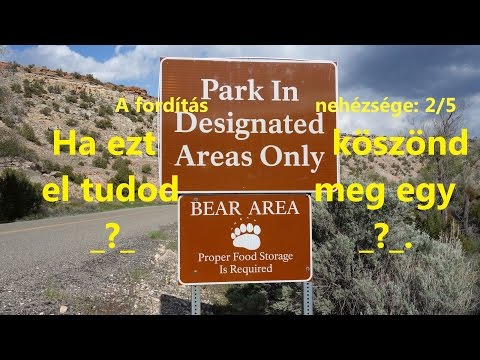
169. thank

hm... ha meg tudod mondani, mi hiányzik, azt is köszönd meg :)
ha nem tudod kapásból lefordítani, az viszont égő... :(


 segítség a nyelvtanhoz:
  * felszólítás (videó)
  * felszólítás_mondatok
  * képes, tud_mondatok

Wikipedia:
...In developed countries, the level of functional literacy of an individual is proportional to income level and inversely proportional to the risk of committing crime. For example, according to the National Center for Educational Statistics in the United States:
  • Over 60% of adults in the US prison system read at or below the fourth grade level
  • 85% of US juvenile inmates are functionally illiterate
  • 43% of adults at the lowest level of literacy lived below the poverty line, as opposed to 4% of those with the highest levels of literacy.
According to begintoread.com:
  • Two-thirds of students who cannot read proficiently by the fourth grade will end up in jail or on welfare.
  • Three out of four individuals who receive food stamps read on the two lowest levels of literacy.
  • 16-to-19-year-old girls at the poverty line and below with below-average reading skills are 6 times more likely to have out-of-wedlock children than their more literate counterparts...
...In the United States, according to Business magazine, an estimated 15 million functionally illiterate adults held jobs at the beginning of the 21st century. The American Council of Life Insurers reported that 75% of the Fortune 500 companies provide some level of remedial training for their workers. All over the U.S.A. 30 million (14% of adults) are unable to perform simple and everyday literacy activities.
The National Center for Education Statistics provides more detail. Literacy is broken down into three parameters: prose, document, and quantitative literacy. Each parameter has four levels: below basic, basic, intermediate, and proficient. For prose literacy, for example, a below basic level of literacy means that a person can look at a short piece of text to get a small piece of uncomplicated information, while a person who is below basic in quantitative literacy would be able to do simple addition. In the US, 14% of the adult population is at the "below basic" level for prose literacy; 12% are at the "below basic" level for document literacy; and 22% are at that level for quantitative literacy. Only 13% of the population is proficient in these three areas—able to compare viewpoints in two editorials; interpret a table about blood pressure, age, and physical activity; or compute and compare the cost per ounce of food items.

The UK government's Department for Education reported in 2006 that 47% of school children left school at age 16 without having achieved a basic level in functional mathematics, and 42% fail to achieve a basic level of functional English. Every year, 100,000 pupils leave school functionally illiterate in the UK.

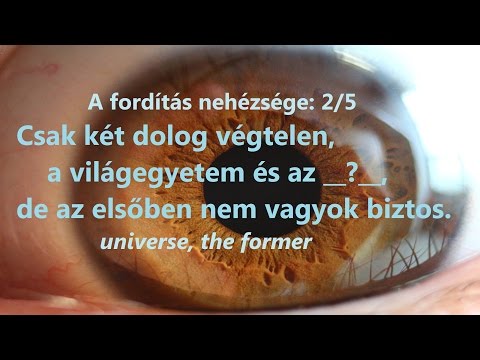
168. infinite

ha nem vagy egy einstein, akkor pláne kitalálhatod, mi hiányzik. a fordítás aztán már tényleg babakönnyű :)


 segítség a nyelvtanhoz:
  * névelők_mondatok

Wikipedia:
This aversion to war also led Einstein to befriend author Upton Sinclair and film star Charlie Chaplin, both noted for their pacifism. Carl Laemmle, head of Universal Studios, gave Einstein a tour of his studio and introduced him to Chaplin. They had an instant rapport, with Chaplin inviting Einstein and his wife, Elsa, to his home for dinner. Chaplin said Einstein's outward persona, calm and gentle, seemed to conceal a "highly emotional temperament," from which came his "extraordinary intellectual energy."
Chaplin also remembers Elsa telling him about the time Einstein conceived his theory of relativity. During breakfast one morning, he seemed lost in thought and ignored his food. She asked him if something was bothering him. He sat down at his piano and started playing. He continued playing and writing notes for half an hour, then went upstairs to his study, where he remained for two weeks, with Elsa bringing up his food. At the end of the two weeks, he came downstairs with two sheets of paper bearing his theory.

Charlie Chaplin and Einstein at the Hollywood premiere of City Lights, January 1931

Chaplin's film, City Lights, was to premiere a few days later in Hollywood, and Chaplin invited Einstein and Elsa to join him as his special guests. Walter Isaacson, Einstein's biographer, described this as "one of the most memorable scenes in the new era of celebrity." Einstein and Chaplin arrived together, in black tie, with Elsa joining them, "beaming." The audience applauded as they entered the theater. Chaplin visited Einstein at his home on a later trip to Berlin, and recalled his "modest little flat" and the piano at which he had begun writing his theory. Chaplin speculated that it was "possibly used as kindling wood by the Nazis."

167. revenue enhancement

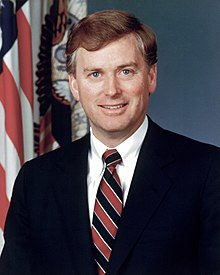
ez a politikus sem az intellektusáról híres (nem, nem az, akire most gondolsz) – tudod-e, melyik két szó hiányzik? a fordítás nem nehéz, de ha az eredetire akarsz kilyukadni, használd fel a dőlt betűsöket és légy óvatos... :)


 segítség a nyelvtanhoz:
  * igeidők (videó)
  * névelők_mondatok

Wikipedia: James Danforth "Dan" Quayle (born February 4, 1947) is an American politician. He was the 44th Vice President of the United States, serving during the term of President George H. W. Bush (1989–93)...

44th Vice president of the United States

On May 19, 1992, Quayle gave a speech entitled Reflections on Urban America to the Commonwealth Club of California on the subject of the Los Angeles riots. In this speech, Quayle blamed the violence on a decay of moral values and family structure in American society. In an aside, he cited the single mother title character in the television program Murphy Brown as an example of how popular culture contributes to this "poverty of values", saying, "It doesn't help matters when prime time TV has Murphy Brown – a character who supposedly epitomizes today's intelligent, highly paid, professional woman – mocking the importance of fathers, by bearing a child alone, and calling it just another 'lifestyle choice'." The "Murphy Brown speech" became one of the most memorable incidents of the 1992 campaign...
...Throughout his time as vice president, Quayle was widely ridiculed in the media and by many in the general public, both in the U.S. and overseas, as an intellectual lightweight and generally incompetent. Contributing greatly to the perception of Quayle's incompetence was his tendency to make public statements that were either self-contradictory ("The Holocaust was an obscene period in our nation's history. ... No, not our nation's, but in World War II. I mean, we all lived in this century. I didn't live in this century, but in this century's history"), self-contradictory and confused ("I have made good judgments in the past. I have made good judgments in the future") or just confused (such as his address to the United Negro College Fund, whose slogan is "A mind is a terrible thing to waste," where he said "You take the UNCF model that what a waste it is to lose one's mind or not to have a mind is being very wasteful. How true that is.")...
...Shortly after Bush announced the Space Exploration Initiative, which included a manned landing on Mars, Quayle was asked his thoughts on sending humans to Mars. In his response he made a series of scientifically erroneous statements: "Mars is essentially in the same orbit [as Earth]... Mars is somewhat the same distance from the Sun, which is very important. We have seen pictures where there are canals, we believe, and water. If there is water, that means there is oxygen. If oxygen, that means we can breathe."
During the 1992 presidential campaign, Quayle told the news media that he believed homosexuality was a choice, and "the wrong choice."...

166. drunk

(hétfői felütés, Off Course. légy kreatív.) aki ezt lefordítja, meg-e lesz híva sörre. ott dől az összes szó, amire szükséged lehet – egy feles után nyilván eltalálod a sorrendet is :)


 segítség a nyelvtanhoz:
  * összehasonlítás és fokozás_mondatok

(http://www.telegraph.co.uk)
By Patrick Sawer, senior reporter
4 DECEMBER 2016 • 10:24AM
It is that time of year when your guests tend to over-indulge and imbibe more than is good for them, leaving their hosts to pick up the pieces.

But pets are also likely to succumb to alcohol poisoning during the festive period, as a result of them sneaking a sip of any drink left lying around the house - with potentially dire consequences.
And with more people now drinking at home than in pubs the problem is likely to get worse.

165. sex between

némi beleérzéssel kitalálhatod, melyik szó hiányzik kétszer is.
a fordításhoz komoly segítséget kapsz – ha így sem sikerül, izmosodnod kéne,
persze hogy az Off Course angollal :)


 segítség a nyelvtanhoz:
  * feltételes mód (videó)
  * képes, tud_mondatok

Wikipedia: An intersex human or other animal is one possessing any of several variations in sex characteristics including chromosomes, gonads, sex hormones, or genitals that, according to the UN Office of the High Commissioner for Human Rights, "do not fit the typical definitions for male or female bodies". Such variations may involve genital ambiguity, and combinations of chromosomal genotype and sexual phenotype other than XY-male and XX-female.
Intersex people were previously referred to as hermaphrodites, "congenital eunuchs", or even congenitally "frigid". Such terms have fallen out of favor; in particular, the phrase "hermaphrodite" is considered to be misleading, stigmatizing, and scientifically specious. Medical description of intersex traits as disorders of sex development has been controversial since the label was introduced in 2006.
Some intersex infants and children, such as those with ambiguous outer genitalia, are surgically or hormonally altered to create more socially acceptable sex characteristics. However, this is considered controversial, with no firm evidence of good outcomes. Such treatments may involve sterilization. Adults, including elite female athletes, have also been subjects of such treatment. Increasingly these issues are considered human rights abuses, with statements from international and national human rights and ethics institutions. Intersex organizations have also issued statements, including joint statements as part of an International Intersex Forum.

Participants at the third International Intersex Forum, Malta, in December 2013

In 2011, Christiane Völling became the first intersex person known to have successfully sued for damages in a case brought for non-consensual surgical intervention. In April 2015, Malta became the first country to outlaw non-consensual medical interventions to modify sex anatomy, including that of intersex people.
Intersex people may have any gender identity. Some intersex individuals may be raised as a girl or boy but then identify with another gender identity later in life, while most do not.

164. happiness

ha te is tudod a tutit, egészítsd ki... a fordításban használd fel a dőlt betűsöket – nagy gondod nem lesz, ha ránézel, milyen nyelvtanra kell ügyelni :)


 segítség a nyelvtanhoz:
  * időegyeztetés (videó)
  * igeidők-2: kivételek, érdekességek_mondatok
  * névelők_mondatok

Wikipedia: Gahan Wilson (born February 18, 1930) is an American author, cartoonist and illustrator known for his cartoons depicting horror-fantasy situations... ...Wilson's cartoons and illustrations are drawn in a playfully grotesque style and have a dark humor that is often compared to the work of The New Yorker cartoonist and Addams Family creator Charles Addams...

 (http://weirdfictionreview.com/)

...His comic strip Nuts, which appeared in National Lampoon, was a reaction against what he saw as the saccharine view of childhood in strips like Peanuts. His hero, The Kid, sees the world as dark, dangerous and unfair—but also occasionally a fun place...
...Wilson wrote and illustrated a short story for Harlan Ellison's anthology Again, Dangerous Visions (1972). The "title" is a black blob, and the story is about an ominous black blob that appears on the page, growing at an alarming rate...
...Wilson created a computer game, Gahan Wilson's The Ultimate Haunted House, with Byron Preiss. The goal is to collect 13 keys in 13 hours from the 13 rooms of a house by interacting in various ways with characters (two-headed monster, mad scientist, vampiress), objects and the house itself...
...In 2009, Fantagraphics Books released Gahan Wilson: 50 Years of Playboy Cartoons, a slipcased, three-volume collection of Wilson's cartoons and short stories for that magazine. A collection of his work, Fifty Years of Gahan Wilson, was published in 2010. Fantagraphics announced a "complete" edition of Nuts for the Spring of 2011.
https://www.facebook.com/Gahan-Wilson-97543324363/
youtube: http://www.nytimes.com/video/movies/100000004364183/gahan-wilson-born-dead-still-weird.html

163. words, words, words: most aztán se ló

ez micsoda hét volt, amikor Off Course angol megosztotta, hogy emlékezik két több mint barátra: Melindára és Andrásra, akikkel tényleg-de-tényleg bármilyen témában tudtunk felszabadultan "humorizálni". itt és most mosolyt küldök nekik -- és akkor tessék a mindentbele szótanulás utolsó darabja, csak 1 percben, megint hülyéskedve 


köszönet Bíró Attilának az igényes stúdiómunkáért és a szerkesztésért.
a videóhoz felhasznált forrás: N. Yerges András, Salamon Gábor, Zalotay Melinda: Huron's Wordplus (Nagy Szótanulós Könyv, a leggyakoribb 1500 angol szó), Texoft Kft., 1995.


részletek a Huron’s Wordplus bevezetőjéből:
…Úgy sejtettük, hogy bárki, aki már elkezdett angolul tanulni, örülne egy olyan szótanulósnak, amelyből minden flancolás és módszertani villogás nélkül egyszerűen csak megjegyezhető egy rahedli szó… …nálunk minden a szavaink megjegyzéséért van…
…Ha megvetted ezt a könyvet, akkor te szeretnél bemagolni sok szót. A Wordplus szerintünk csak erre alkalmas (erre leginkább csak a Wordplus alkalmas), sokminden másra nem.
Nem csináltunk úgy, mintha társalgást tudnánk gyakoroltatni. Olyant se nagyon találsz majd, hogy angol szövegösszefüggésből (szép szó!) találhatod ki az „új szó” jelentését. Velünk nyelvtanozni sem igen sikerülhet…
…Védj meg minket, ha szidnának a jó anyanyelvünk „túlzott” használatáért. Természetesen, aki erre vetemedik, magyarul példálózik majd: „azt, hogy a fault azt jelenti, hogy hiba, kontextusból jó megtanulni”… Szerintünk viszont teljesen normális, ha szeretnéd gyorsan és alaposan megjegyezni, hogy a fault „mit jelent magyarul”, aztán majd igyekszel megtudni és begyakorolni, hogy valójában mit is jelent (a helyesírási hibát például nem, mert az mistake), és hogyan használd (pl. ez az én hibám volt: it was my fault [it vaz májfolt]) – ezért fülel az ember, ha angol beszédet hall, könyvet is vesz, órákra jár…

162. words, words, words: bent van a lyukban

szabadságot egész hétre: Off Course angol megosztja, hogy emlékezik két több mint barátra: Melindára és Andrásra, akikkel tényleg-de-tényleg bármilyen témában tudtunk felszabadultan „humorizálni”. itt és most mosolyt küldök nekik – és akkor tessék a mindentbele szótanulás, mindig csak 1 percben, mindig hülyéskedve :)


köszönet Bíró Attilának az igényes stúdiómunkáért és a szerkesztésért.
a videóhoz felhasznált forrás: N. Yerges András, Salamon Gábor, Zalotay Melinda: Huron's Wordplus (Nagy Szótanulós Könyv, a leggyakoribb 1500 angol szó), Texoft Kft., 1995.


részletek a Huron’s Wordplus bevezetőjéből:
…Úgy sejtettük, hogy bárki, aki már elkezdett angolul tanulni, örülne egy olyan szótanulósnak, amelyből minden flancolás és módszertani villogás nélkül egyszerűen csak megjegyezhető egy rahedli szó… …nálunk minden a szavaink megjegyzéséért van…
…Ha megvetted ezt a könyvet, akkor te szeretnél bemagolni sok szót. A Wordplus szerintünk csak erre alkalmas (erre leginkább csak a Wordplus alkalmas), sokminden másra nem.
Nem csináltunk úgy, mintha társalgást tudnánk gyakoroltatni. Olyant se nagyon találsz majd, hogy angol szövegösszefüggésből (szép szó!) találhatod ki az „új szó” jelentését. Velünk nyelvtanozni sem igen sikerülhet…
…Védj meg minket, ha szidnának a jó anyanyelvünk „túlzott” használatáért. Természetesen, aki erre vetemedik, magyarul példálózik majd: „azt, hogy a fault azt jelenti, hogy hiba, kontextusból jó megtanulni”… Szerintünk viszont teljesen normális, ha szeretnéd gyorsan és alaposan megjegyezni, hogy a fault „mit jelent magyarul”, aztán majd igyekszel megtudni és begyakorolni, hogy valójában mit is jelent (a helyesírási hibát például nem, mert az mistake), és hogyan használd (pl. ez az én hibám volt: it was my fault [it vaz májfolt]) – ezért fülel az ember, ha angol beszédet hall, könyvet is vesz, órákra jár…

161. words, words, words: kopogtatnak

még tart a micsoda hét: Off Course angol megosztja, hogy emlékezik két több mint barátra: Melindára és Andrásra, akikkel tényleg-de-tényleg bármilyen témában tudtunk felszabadultan „humorizálni”. itt és most mosolyt küldök nekik – és akkor tessék a mindentbele szótanulás, mindig csak 1 percben, mindig hülyéskedve J


köszönet Bíró Attilának az igényes stúdiómunkáért és a szerkesztésért.
a videóhoz felhasznált forrás: N. Yerges András, Salamon Gábor, Zalotay Melinda: Huron's Wordplus (Nagy Szótanulós Könyv, a leggyakoribb 1500 angol szó), Texoft Kft., 1995.


részletek a Huron’s Wordplus bevezetőjéből:
…Úgy sejtettük, hogy bárki, aki már elkezdett angolul tanulni, örülne egy olyan szótanulósnak, amelyből minden flancolás és módszertani villogás nélkül egyszerűen csak megjegyezhető egy rahedli szó… …nálunk minden a szavaink megjegyzéséért van…
…Ha megvetted ezt a könyvet, akkor te szeretnél bemagolni sok szót. A Wordplus szerintünk csak erre alkalmas (erre leginkább csak a Wordplus alkalmas), sokminden másra nem.
Nem csináltunk úgy, mintha társalgást tudnánk gyakoroltatni. Olyant se nagyon találsz majd, hogy angol szövegösszefüggésből (szép szó!) találhatod ki az „új szó” jelentését. Velünk nyelvtanozni sem igen sikerülhet…
…Védj meg minket, ha szidnának a jó anyanyelvünk „túlzott” használatáért. Természetesen, aki erre vetemedik, magyarul példálózik majd: „azt, hogy a fault azt jelenti, hogy hiba, kontextusból jó megtanulni”… Szerintünk viszont teljesen normális, ha szeretnéd gyorsan és alaposan megjegyezni, hogy a fault „mit jelent magyarul”, aztán majd igyekszel megtudni és begyakorolni, hogy valójában mit is jelent (a helyesírási hibát például nem, mert az mistake), és hogyan használd (pl. ez az én hibám volt: it was my fault [it vaz májfolt]) – ezért fülel az ember, ha angol beszédet hall, könyvet is vesz, órákra jár…

160. words, words, words: Alföld

micsoda hét: Off Course angol megosztja, hogy emlékezik két több mint barátra: Melindára és Andrásra, akikkel tényleg-de-tényleg bármilyen témában tudtunk felszabadultan „humorizálni”. itt és most mosolyt küldök nekik – és akkor tessék a mindentbele szótanulás, mindig csak 1 percben, mindig hülyéskedve J


köszönet Bíró Attilának az igényes stúdiómunkáért és a szerkesztésért.
a videóhoz felhasznált forrás: N. Yerges András, Salamon Gábor, Zalotay Melinda: Huron's Wordplus (Nagy Szótanulós Könyv, a leggyakoribb 1500 angol szó), Texoft Kft., 1995.


részletek a Huron’s Wordplus bevezetőjéből:
…Úgy sejtettük, hogy bárki, aki már elkezdett angolul tanulni, örülne egy olyan szótanulósnak, amelyből minden flancolás és módszertani villogás nélkül egyszerűen csak megjegyezhető egy rahedli szó… …nálunk minden a szavaink megjegyzéséért van…
…Ha megvetted ezt a könyvet, akkor te szeretnél bemagolni sok szót. A Wordplus szerintünk csak erre alkalmas (erre leginkább csak a Wordplus alkalmas), sokminden másra nem.
Nem csináltunk úgy, mintha társalgást tudnánk gyakoroltatni. Olyant se nagyon találsz majd, hogy angol szövegösszefüggésből (szép szó!) találhatod ki az „új szó” jelentését. Velünk nyelvtanozni sem igen sikerülhet…
…Védj meg minket, ha szidnának a jó anyanyelvünk „túlzott” használatáért. Természetesen, aki erre vetemedik, magyarul példálózik majd: „azt, hogy a fault azt jelenti, hogy hiba, kontextusból jó megtanulni”… Szerintünk viszont teljesen normális, ha szeretnéd gyorsan és alaposan megjegyezni, hogy a fault „mit jelent magyarul”, aztán majd igyekszel megtudni és begyakorolni, hogy valójában mit is jelent (a helyesírási hibát például nem, mert az mistake), és hogyan használd (pl. ez az én hibám volt: it was my fault [it vaz májfolt]) – ezért fülel az ember, ha angol beszédet hall, könyvet is vesz, órákra jár…

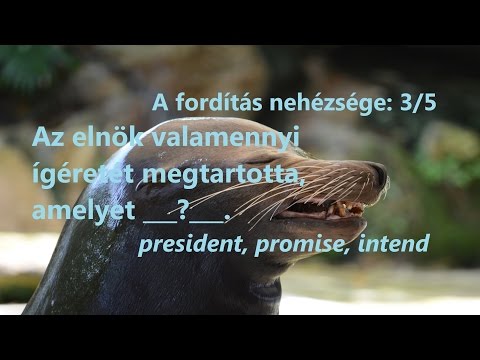
159. promises

rávágod-e, már csak mi hiányzik?... a fordításod nem múlhat a szavakon – ha ránézel
a nyelvtani segítségre, akkor simán menni fog, vagy nem :)


 segítség a nyelvtanhoz:
  * igeidők (videó)
  * vonatkozó mellékmondatok_mondatok
  * mindegyik, az összes_mondatok

(http://www.politifact.com)
1. ‘Build a wall’ — and make Mexico pay for it
Trump announced his candidacy with the promise "to build a great, great wall on our southern border" and "have Mexico pay for that wall," and has repeated the call with conviction and consistency...
"...this is going to be 1,200 miles from Brownsville to El Paso, 30-foot high, and listen, I know you can’t do that," former Texas Gov. Rick Perry said recently...
2. Temporarily ban Muslims from entering the United States
Following the December 2015 shooting in San Bernardino, Calif., Trump called for "a total and complete shutdown of Muslims entering the United States until our country’s representatives can figure out what is going on."
The next day, Trump admitted that details "would have to worked out"...
3. ‘Bring manufacturing (jobs) back’
Trump has said he will revitalize manufacturing in various iterations (i.e. "I’m going to be the greatest jobs president God ever created") and laid out how in his June 28 speech on the economy...
4. Impose tariffs on goods made in China and Mexico...
5. Renegotiate or withdraw from the North American Free Trade Agreement and Trans-Pacific Partnership
Trump has been most critical of NAFTA and TPP, pinning them to Clinton and past and future job losses...
6. ‘Full repeal of Obamacare’ and replace it with a market-based alternative
Trump’s call to repeal Obamacare and replace it with a marketplace alternative is popular among rank-and-file Republicans. Larger majorities in Congress would be needed for repeal...
7. Renegotiate the Iran deal
Similarly, Trump has a shot at delivering on his promise to "renegotiate with Iran" even though Iran has said it won’t revisit the issue...
8. Leave Social Security as is
Trump has said repeatedly that voters like Social Security, so it should be left alone. Unlike most of his primary rivals, Trump vowed to leave the retirement age and benefits intact...
9. Cut taxes
Under Trump’s proposed tax reforms, everyone would indeed get a cut. (The top 0.1 percent would receive more tax relief than the bottom 60 percent of taxpayers combined.)...
10. ‘Bomb’ and/or ‘take the oil’ from ISIS
A twist on his decade-old idea to seize Middle Eastern oil as repayment, Trump repeatedly makes this promise on the campaign trail, arguing it’ll cut off funding to ISIS...

..."Voters generally do not punish candidates for being vague, and in partisan elections voters actually prefer ambiguous candidates over precise ones," Stanford University political scientists Michael Tomz and Robert Van Houweling found in a study. "The reason, we find, is that ambiguity allows voters to 'see what they want to see’ in members of their own party."
Trump himself put it best in February: "Everything is negotiable."

158. president

két szó kell a poénhoz – biztos vagyok benne, hogy van rá ötleted. :) A fordításnál használd fel a dőlt betűsöket, de nehogy nagyképűsködj -- figyelj oda, mert egy hibád még úgy is becsúszhat...


 segítség a nyelvtanhoz:
  * igeidők (videó)
  * időegyeztetés (videó)
  * képes, tud_mondatok

(http://www.wikihow.com)
How to Become President of the United States
To become President of the United States, a candidate must meet a few eligibility requirements and then enter the presidential race. Modern day presidential races do not require the backing of a political party, but it helps in terms of organization and fundraising.
Meeting the eligibility requirements
1. Prove you are a natural born citizen of the United States. This is a constitutional requirement. If you are presently a citizen but you were born in another country, you are not eligible to be president, unless one of your parents was born as an American citizen.
2. Turn 35 years old. The constitution also prohibits anyone who is not yet 35 years of age from becoming president.
3. Live in the United States for at least 14 consecutive years before you run for president. This residency requirement is found in Article II of the Constitution with the other two eligibility requirements.
4. Get plenty of education. While there are no educational requirements or experience necessary per se, most presidents have had advanced degrees and studied law or business before entering politics. You're best off taking classes in history, sociology, law, economics and international relations.
5. Seek out a politically-related career. Though this isn't written in the books, generally presidential hopefuls start in the political arena on a much smaller scale. So get involved in your community! Run for mayor, governor, senator, or some other representative of your state. It's the best way to get your name out there.
Becoming a candidate for president
1. Talk to your family and supporters. Becoming president includes a grueling campaign where every bit of your personal and professional life will be picked apart by the media and your competitors. You will need support. It'll be tough on you, but it'll also be tough on your family. You'll be flitting to and from during your campaign with very little time for your spouse and children. Is it worth it?
2. Form an exploratory committee. This committee can "test the waters" or determine what your chances are. It's the standard first step to starting out on the presidential path. Appoint a campaign manager to put together this committee for you. This should be someone you know and trust, who has experience with politics, fundraising and campaigns.
3. Register with the Federal Election Commission (FEC). Once you begin receiving donations or spending money in excess of $5,000, you must register. While this doesn't mean you're officially running, the FEC basically assumes that you are. You wouldn't be tossing around this kind of money otherwise.
4. Declare your candidacy publicly. This is an opportunity to hold a rally for supporters and voters. Most presidential candidates hold a rally in their hometown or some other significant location. So bust out the t-shirts, the buttons, and the bumper stickers. It's campaign time!

157. tomorrow

no, szerinted mi lesz így a holnapunkkal? a fordításhoz használd fel a dőlt betűsöket,
és nagyon, nagyon vigyázz... :)


 segítség a nyelvtanhoz:
  * igeidők (videó)

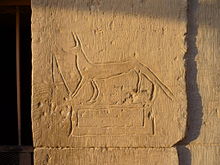
Wikipedia: Graffiti (plural of graffito: "a graffito", but "these graffiti") are writing or drawings that have been scribbled, scratched, or painted illicitly on a wall or other surface, often within public view. Graffiti range from simple written words to elaborate wall paintings, and they have existed since ancient times, with examples dating back to Ancient Egypt, Ancient Greece, and the Roman Empire.
Ancient graffito at Kom Ombo Temple, Egypt
In modern times, paint (particularly spray paint) and marker pens have become the most commonly used graffiti materials. In most countries, marking or painting property without the property owner's permission is considered defacement and vandalism, which is a punishable crime.
New York City Subway trains covered in graffiti (1973)
Graffiti may also express underlying social and political messages and a whole genre of artistic expression is based upon spray paint graffiti styles. Within hip hop culture, graffiti have evolved alongside hip hop music, b-boying, and other elements. Unrelated to hip-hop graffiti, gangs use their own form of graffiti to mark territory or to serve as an indicator of gang-related activities.
Controversies that surround graffiti continue to create disagreement amongst city officials, law enforcement, and writers who wish to display and appreciate work in public locations. There are many different types and styles of graffiti; it is a rapidly developing art form whose value is highly contested and reviled by many authorities while also subject to protection, sometimes within the same jurisdiction.

156. cannot read

éld bele magad a helyzetbe, akkor rájössz, mi hiányzik :)
(a fordítás babakönnyű – azért vigyázz a
„gyorsan”-nál!)


 segítség a nyelvtanhoz:
  * igeidők (videó)
  * képes, tud_mondatok

(http://www.intellectualtakeout.org/blog)
The most frequently referenced definition of “functional literacy” is from UNESCO’s conference in 1978:
“A person is functionally literate who can engage in all those activities in which literacy is required for effective functioning of his group and community and also for enabling him to continue to use reading, writing and calculation for his own and the community’s development.”
The UNESCO definition implies that a functionally literate person possesses a literacy level that equips him or her to flourish in society. A functionally illiterate person, on the other hand, may be able to perform very basic reading and writing, but cannot do so at the level required for many societal activities and jobs...
...Last year, a CNN article also pointed out that there are many college athletes are functionally illiterate. Indeed, it’s been estimated that 19% of high school graduates fall into that category...
...And what is the origin of the statistic that claims 32 million adults in the U.S. are functionally illiterate? It’s based on the National Assessment of Adult Literacy—conducted by the National Center for Education Statistics in 2003—in which a demographically representative population of 19,000 adults were interviewed. According to the findings of the survey, 14% (1 in 7) of adults fell into the category of “Below Basic” in “Prose Literacy,” meaning that they possess “no more than the most simple and concrete literacy skills.” Those who fall into this category are deemed “functionally illiterate.”
An international survey released in 2013 by the Organization for Economic Cooperation and Development yielded similar results for U.S. adults.

155. not filthy

ha ki akarod találni, mi hiányzik, akkor ne tekints el az aktuálpolitikai vonatkozásoktól -- a fordításban pedig semmiképpen ne használd fel így a dőlt betűsöket :)


 segítség a nyelvtanhoz:
  * igeidők (videó)
  * vajon_mondatok

Wiktionary:
not guilty ‎(plural not guilties)
  1. (law) A formal plea by a defendant of not being culpable for the crime with which the defendant is charged.
    If you do not plead, a plea of not guilty will be entered for you.
  2. (law) A verdict or formal finding by the legal system that a defendant is not culpable for the crime with which the defendant was charged.
  3. A member of a jury or tribunal supporting acquittal, or a vote cast in support of acquittal.
  4. A person who has been acquitted of a crime.
Wikipedia:
In legal terms, a plea is simply an answer to a claim made by someone in a criminal case under common law using the adversarial system. Colloquially, a plea has come to mean the assertion by a defendant at arraignment, or otherwise in response to a criminal charge, whether that person pleaded guilty, not guilty, no contest or (in the United States) Alford plea.
The concept of the plea is one of the major differences between criminal procedure under common law and procedure under the civil law system. Under common law, a plea of guilty by the defendant waives trial of the charged offences and the defendant may be sentenced immediately. This produces a system known under American law as plea bargaining.
In civil law jurisdictions, there is generally no concept of a plea of guilty. A confession by the defendant is treated like any other piece of evidence, and a full confession does not prevent a full trial from occurring or relieve the plaintiff(s) from its duty of presenting a case to the trial court.
A "blind plea" is a guilty plea entered with no plea agreement in place. One defendant accused of illegally protesting nuclear power, when asked to enter his plea, stated, "I plead for the beauty that surrounds us"; this type of unorthodox plea is sometimes referred to as a "creative plea," and will usually be interpreted as a plea of not guilty. Likewise, standing mute and refusing to enter any plea at all will usually be interpreted as a not guilty plea; the Federal Rules of Criminal Procedure, for instance, state, "If a defendant refuses to enter a plea or if a defendant organization fails to appear, the court must enter a plea of not guilty."

154. with humor

a halottak napjára haladóknak Off Course műfordítás – pótolható-e a hiány szellemesen?
játssz a sírral – a végső megoldás a fordításban is a grave...


http://www.oxfordlearnersdictionaries.com/
be pushing up (the) daisies
(old-fashioned, humorous) to be dead and in a grave

(http://www.urbandictionary.com)
daisy pusher
Too happy all the time and care free. Optimistic. A modern day hippie (minus the drugs)
Wow, she's a real daisy pusher optimist, with that attitude you can wake up on any side of the bed you want.
by LesJacqueline March 29, 2015
Daisy pusher upper
He or she who is pushing up the daisies. Should preferably be used with ´soon-to-be´or ´future´in front of it. Like: you soon-to-be corpse, in other words "you who are about to die"
Do you see that horizontally challenged lady with the microphone, you future daisy pusher upper you? It´s bye bye time. Bang!!!
by The RAB-man March 15, 2011

(The Concise New Partridge Dictionary of Slang and Unconventional English)
push up the daisies; pushing up the daisies to be dead, especially dead and buried; use is occasionally extended to the dying. An image first sketched as dated ‘turn up your toes to the daisies’ in 1842 – from which we derive turn up your toes, (to die). Other variations that have slipped from use: ‘under the daisies’, ‘kick up daisies’ and, less certainly, ‘grin at the daisy-roots’, which may also relate to ‘roots’ (boots) UK, 1918. 

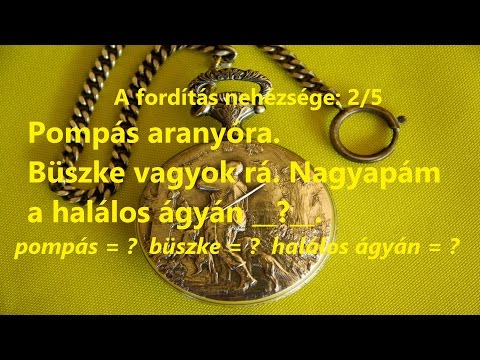
153. pocket watch

ha elárulom, hogy Woody Allen, kitalálhatod a poént... :)
a fordítás meg csak jutifalat, mert tényleg babakönnyű (bár egy bakid lehet!) – neked inkább a szókincs okozhat gondot?


 segítség a nyelvtanhoz:
  * igeidők (videó)

(http://www.imdb.com: Mini Biography By: David McCollum and Michael Castrignano)
Woody Allen was born Allan Stewart Konigsberg on December 1, 1935 in Brooklyn, New York, to Nettie (Cherrie), a bookkeeper, and Martin Konigsberg, a waiter and jewellery engraver. His father was of Russian Jewish descent, and his maternal grandparents were Austrian Jewish immigrants. As a young boy, he became intrigued with magic tricks and playing the clarinet, two hobbies that he continues today. 
Allen broke into show business at 15 years when he started writing jokes for a local paper, receiving $200 a week. He later moved on to write jokes for talk shows but felt that his jokes were being wasted. His agents, Charles Joffe and Jack Rollins, convinced him to start doing stand-up and telling his own jokes. Reluctantly he agreed and, although he initially performed with such fear of the audience that he would cover his ears when they applauded his jokes, he eventually became very successful at stand-up. After performing on stage for a few years, he was approached to write a script forWarren Beatty to star in: Mi újság, cicamica? (1965) and would also have a moderate role as a character in the film. During production, Woody gave himself more and better lines and left Beatty with less compelling dialogue. Beatty inevitably quit the project and was replaced by Peter Sellers, who demanded all the best lines and more screen-time.
It was from this experience that Woody realized that he could not work on a film without complete control over its production. Woody's theoretical directorial debut was in Mi újság, Tiger Lily? (1966); a Japanese spy flick that he dubbed over with his own comedic dialogue about spies searching for the secret recipe for egg salad. His real directorial debut came the next year in the mockumentary Fogd a pénzt és fuss (1969). He has written, directed and, more often than not, starred in about a film a year ever since, while simultaneously writing more than a dozen plays and several books of comedy.
While best known for his romantic comedies Annie Hall (1977) and Manhattan (1979), Woody has made many transitions in his films throughout the years, transitioning from his "early, funny ones" of Banánköztársaság (1971), Szerelem és halál (1975) and Amit tudni akarsz a szexről... (1972); to his more storied and romantic comedies of Annie Hall (1977), Manhattan (1979) and Hannah és nővérei (1986); to the Bergmanesque films of Csillagporos emlékek (1980) and Belső terek (1978); and then on to the more recent, but varied works of Bűnök és vétkek (1989), Férjek és feleségek (1992),Hatalmas Aphrodité (1995), _Celebrity_ and Agyament Harry (1997); and finally to his films of the last decade, which vary from the light comedy of Füles (2006), to the self-destructive darkness of Match Point (2005) and, most recently, to the cinematically beautiful tale of Vicky Cristina Barcelona (2008). Although his stories and style have changed over the years, he is regarded as one of the best filmmakers of our time because of his views on art and his mastery of filmmaking.

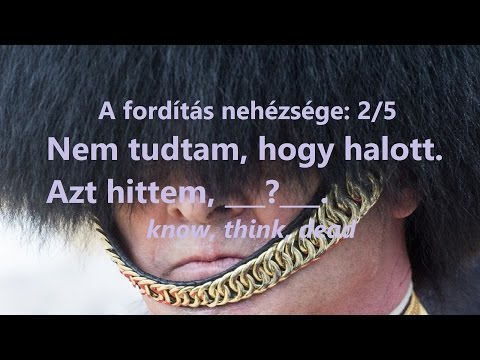
152. dead

tudod-e, mitől poén a poén? a fordítás igen könnyű, de fogadjunk,
hogy két helyen is hibázol :(


 segítség a nyelvtanhoz:
  * időegyeztetés (videó)

(www.oxford-royale.co.uk)

8 British Stereotypes and Why They Are (Mostly) Inaccurate
1. We’re all best mates with Prince William
Mention to someone from another country that you’re from Britain, and one of the responses you may encounter is “Do you know Prince William?” And in that question, you might just as well substitute the heir to the British throne with any other member of the Royal Family....
2. We all live in a gloriously idealised London
In the imaginations of many outside the UK, our capital city is the place in which all British people reside – doubtless in residences with views of the Houses of Parliament or Buckingham Palace. At a push, non-Brits may have heard of other major cities such as Oxford or Edinburgh, and maybe Birmingham, but that’s often as far as non-Brit knowledge extends....
3. We all talk like a Cockney or an aristocrat
“Tally ho old sport! I say, isn’t this some ghastly weather we’re having, what?”
“Alright me old geyser?”
These are the two categories of British accent that constitute most non-Brits’ impressions of how we talk here in Britain. Hollywood has done little to dispel this idea of British speech, as this is how we’re depicted in most movies as well...
4. All we ever talk about is the weather
...But talking about the weather fulfils another purpose: it’s a guaranteed topic for small talk, a safeguard we use to avoid those awkward silences that we self-conscious Brits hate...
5. We have a stiff upper lip
The idea of the “stiff upper lip” comes from the fact that a trembling upper lip betrays a lack of control over one’s emotions, and maintaining a stiff upper lip – not showing any emotion – is something that many people thinkcharacterises the Brits...
6. Our food is awful and we can’t produce our own wine
Some countries – dare we say it, France, for example – look down their noses at British food and deride us for our lack of taste....
7. We’re a nation of queuers
Now here is a British stereotype that definitely is true, and we’re very glad about it. We Brits are renowned for forming an orderly queue whenever the need arises. We’re not ones for pushing and shoving; we let fairness rule the day and patiently wait our turn...
8. We complain a lot – but we also say sorry a lot
It’s true: we do complain a lot. We love grumbling to each other about everything from our neighbours to politicians, from energy bills to noisy parties and from the weather being too cold to the weather being too hot. But we’re normally too polite actually to complain to the source of the grievance. In a restaurant, for example, we might privately complain to our dining companion about the standard of the food, but when the waiter comes round to ask us if everything is alright with our meals, most of us will politely tell them how good it is...

nyelvtan frissítés: időegyeztetés


a blogon találsz még több mint 140 jófajta angol idézetet fordítással, nyelvtan-videókkal,
a nyelvtan használatát bemutató kétnyelvű mondattárral, szókártyákkal. sőt, ha lájkolod
az Off Course Angol oldal fészbuk-oldalát, akkor hetente újabb idézetekhez jutsz!
Off Course Angol tanár nélkül -- ahogy még nem csináltad :)


 kapcsolódó nyelvtan:
  * igeidők (videó)
  * függő beszéd_mondatok
  * vajon_mondatok
  * igeidők-2: érdekességek, kivételek_mondatok

IDÉZETEK: 158. president 152. dead 90. at Oxford 86. Irishman 8. bath toys

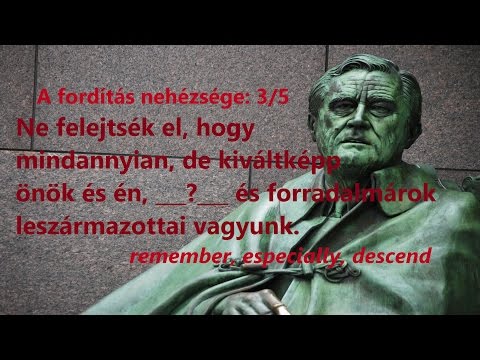
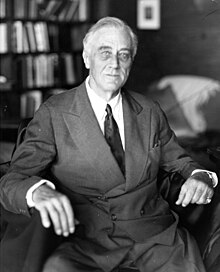
151. FDR


rájössz-e, mivel kérkedett Roosevelt elnök? ha azt hiszed, tudsz már valamennyire angolul, akkor próbáld meg eltalálni, hogy pontosan hogyan – sikerülhet, ha a fordításhoz felhasználod a dőlt betűsöket :)


 segítség a nyelvtanhoz:
  * felszólítás (videó)
  * felszólítás_mondatok
  * igeidők (videó)
  * mindegyik, az összes_mondatok

Wikipedia: ...A majority of polls rank Roosevelt as the second or third greatest president, consistent with other surveys. Roosevelt is the sixth most admired person from the 20th century by U.S. citizens, according to Gallup. Roosevelt was also widely beloved for his role in repealing Prohibition.
The rapid expansion of government programs that occurred during Roosevelt's term redefined the role of the government in the United States, and Roosevelt's advocacy of government social programs was instrumental in redefining liberalism for coming generations.
Roosevelt firmly established the United States' leadership role on the world stage, with his role in shaping and financing World War II. His isolationist critics faded away, and even the Republicans joined in his overall policies. After his death, his widow continued to be a forceful presence in US and world politics, serving as delegate to the conference which established the United Nations and championing civil rights and liberalism generally. Many members of his administration played leading roles in the administrations of Truman, Kennedy and Johnson, each of whom embraced Roosevelt's political legacy.
Reflecting on Roosevelt's presidency, "which brought the United States through the Great Depression and World War II to a prosperous future", said FDR's biographer Jean Edward Smith in 2007, "He lifted himself from a wheelchair to lift the nation from its knees."...

Last photograph of Roosevelt, taken the day before his death (April 11, 1945)

...Roosevelt is the only President of the United States to serve more than two terms in office; in 1947, the 22nd Amendment limiting Presidential terms was ratified by the states.

150. good for evil

fontos életvezetési hasznosság – rájössz, hogyan szóljon?
egyébként: a fordítás a lényeg, középfokon :)


 segítség a nyelvtanhoz:
  * kell, tilos_mondatok
  * talán, bizonyára_mondatok

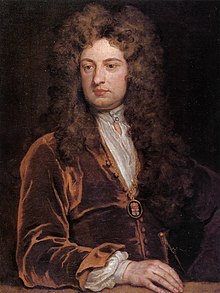
Wikipedia: Sir John Vanbrugh (24 January 1664 (baptised) – 26 March 1726) was an English architect and dramatist, perhaps best known as the designer of Blenheim Palace and Castle Howard. He wrote two argumentative and outspoken Restoration comedies, The Relapse (1696) and The Provoked Wife (1697), which have become enduring stage favourites but originally occasioned much controversy. He was knighted in 1714.


Godfrey Kneller's Kit-cat portrait, held in the National Portrait Gallery (United Kingdom)

Vanbrugh was in many senses a radical throughout his life. As a young man and a committed Whig, he was part of the scheme to overthrow James II, put William III on the throne and protect English parliamentary democracy, and he was imprisoned by the French as a political prisoner. In his career as a playwright, he offended many sections of Restoration and 18th century society, not only by the sexual explicitness of his plays, but also by their messages in defence of women's rights in marriage. He was attacked on both counts, and was one of the prime targets of Jeremy Collier's Short View of the Immorality and Profaneness of the English Stage. In his architectural career, he created what came to be known as English Baroque. His architectural work was as bold and daring as his early political activism and marriage-themed plays, and jarred conservative opinions on the subject...
...Vanbrugh is remembered today for his vast contribution to British culture, theatre, and architecture...
...After Vanbrugh's death Abel Evans suggested this as his epitaph:
   Under this stone, reader, survey
   Dead Sir John Vanbrugh's house of clay.
   Lie heavy on him, Earth! For he
   Laid many heavy loads on thee!
Vanbrugh was buried in the church of St Stephen Walbrook in the City of London, but his grave is unmarked and the above epitaph is as yet unused.

149. press

beugratós... rájössz-e, mi hiányzik, vagy mégse?
a fordítást viszont (hiába saccolod magad haladónak), egyáltalán nem biztos, hogy elegánsan meg tudod oldani, próbálkozz – használd fel a dőlt betűst :)


 segítség a nyelvtanhoz:
  * igeidők (videó)
  * vonatkozó mellékmondatok_mondatok

(https://freedomhouse.org/)