A következő címkéjű bejegyzések mutatása: szegénység. Összes bejegyzés megjelenítése

Top 3 in 2016: (3) once upon a time


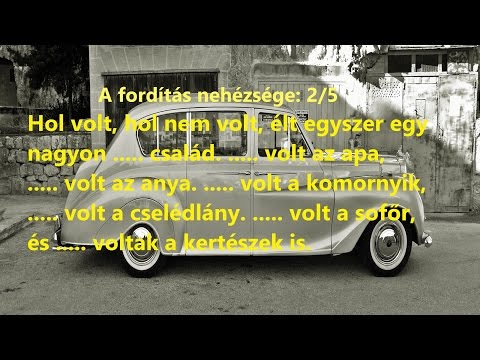
ugyanaz a szó illik mindenhova – rájössz-e 10 másodpercen belül, hogy melyik?
a fordításban babakönnyű a nyelvtan, a te szinteden a szókincs is nyilván ismerős :)


http://www.theatlantic.com/
History has rendered its verdict on communism, and now Google autocomplete has too.
That verdict? Well, see for yourself. Try searching "Why is Estonia so...." Now try "Why is Ukraine so...." And "Why is Hungary so...." Notice a pattern?
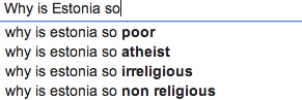
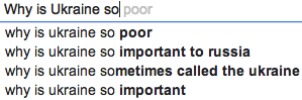
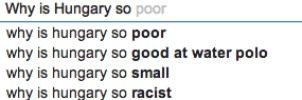
As you can see in the map above from Randal Olson, most people want Google to tell them why post-communist Europe is still so poor. Though there are some exceptions. The top result for Poland is "weak." For Lithuania, it's "suicidal." Russia, Slovenia, Macedonia, Croatia, and the Czech Republic all at least get off with more neutral ones. (And Turkey's is most certainly for the meat, not the country)...
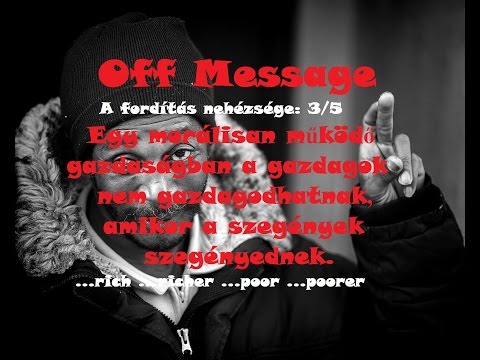

Off Message: poor

off message: kb. a hivatalos állásponttal nem egyező, attól eltérő véleménynyilvánítás, nyilatkozat, kijelentés


 Segítség a nyelvtanhoz:
  * kellene, nem szabadna (videó)
  * kellene, nem szabadna_mondatok
  * összehasonlítás és fokozás_mondatok

Wikipedia: Malachi Brendan Martin (Irish: Maolsheachlann Breandán Ó Máirtín; July 23, 1921 – July 27, 1999), occasionally writing under the pseudonym Michael Serafian, was an Irish Catholic priest and writer on the Catholic Church. Originally ordained as a Jesuit priest, he became Professor of Palaeography at the Vatican's Pontifical Biblical Institute. From 1958 he served as secretary to Cardinal Bea during preparations for the Second Vatican Council. Disillusioned by reforms, he asked to be released from certain of his Jesuit vows in 1964 and moved to New York City, where he later became an American citizen. His 17 novels and non-fiction books were frequently critical of the Catholic Church, which he believed had failed to act on the third prophecy revealed by the Virgin Mary at Fátima.[1] Among his most significant works were The Scribal Character of The Dead Sea Scrolls (1958) and Hostage To The Devil (1976) which dealt with satanism, demonic possession, and exorcism. The Final Conclave(1978) was a warning against alleged Soviet spies in the Vatican.