A következő címkéjű bejegyzések mutatása: kormány. Összes bejegyzés megjelenítése

193. minister

légy szarkasztikus – vagy simán mondd, amit gondolsz, az segíthet kitalálni a hiányzó szót. a fordítást is menjen csak úgy, kapásból – ha minden dőlt betűst felhasználsz, előállíthatod az eredetit :)


 segítség a nyelvtanhoz:
  * összehasonlítás és fokozás_mondatok

Wikipedia: A cabinet is a body of high-ranking state officials, typically consisting of the top leaders of the executive branch. They are usually called ministers, but in some jurisdictions are sometimes called secretaries.
In some countries, particularly those that use a parliamentary system (e.g., the UK), the Cabinet collectively decides the government's direction, especially in regard to legislation passed by the parliament. In countries with a presidential system, such as the United States, the Cabinet does not function as a collective legislative influence; rather, their primary role is as an official advisory council to the head of government. In this way, the President gets opinions and advice in upcoming decisions.
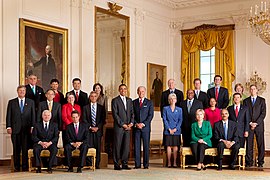
Former President Barack Obama's Cabinet, 2009

In many parliamentary democracies, including those that use the Westminster system, Cabinet ministers are usually (or mandatory) appointed from among sitting members of the legislature and either remain members of the legislature while serving in the cabinet (e.g. in the United Kingdom), or have to give up their seat in parliament, which is especially the case in countries with a strict separation between the executive and legislative branches of government (e.g. Luxembourg, Switzerland, Belgium etc.).
The latter is usually also the case in countries with a presidential system: Cabinet members cannot be sitting legislators, and legislators who are offered appointments must resign if they wish to accept.
In most governments, members of the Cabinet are given the title of minister, and each holds a different portfolio of government duties ("Minister for the Environment," etc.).
In a few governments, as in the case of Mexico, the Philippines, the United Kingdom, and United States, the title of secretary is also used for some Cabinet members ("Secretary of Education," or "Secretary of State" in the UK). In many countries (e.g. Germany, Luxembourg, France, etc.), a Secretary (of State) is a cabinet member with an inferior rank to a minister.
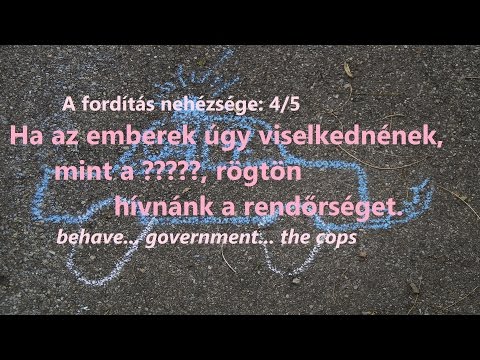
115. if people

ha az Off Course Angolon edződtél, akkor tudni fogod, mi hiányzik :) ...és akkor a feltételes mód sem fog gondot okozni – viszont vannak egyéb nehézségek...


 Segítség a nyelvtanhoz:
  * feltételes mód (videó)
  * feltételes mód_mondatok
  * milyen és olyan, mint_mondatok
  * általános alany_mondatok
  * névelők_mondatok

Wikipedia: Kelvin R. Throop (also 'Kelvin R. Throop III' or 'Kelvin Throop III') is a fictional character and collective pseudonym created by R. A. J. Phillips in a story which appeared in Analog Science Fiction and Science Fact magazine in July 1964. With the encouragement of editor John W. Campbell, Throop subsequently figured in additional stories by other authors. The archetypal Throop story finds him within a large bureaucracy which, solely by his acid-penned memos, he causes to self-destruct, whereupon he disappears until the next story. In mid-December 1984, Analog published a special Kelvin Throop humor edition. Numerous humorous epigrams attributed to Throop were published in Analog over a period of decades...

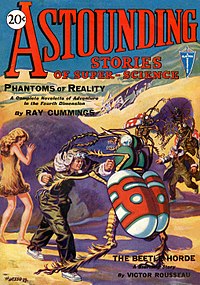
...Analog Science Fiction and Fact is an American science fiction magazine. As of 2015, it is the longest running continuously published magazine of that genre, the June 2015 issue being number 1,000.
The first issue of Astounding Stories, January 1930

Initially published in 1930 in the United States as Astounding Stories as a pulp magazine, it has undergone several name changes, primarily toAstounding Science-Fiction in 1938, and Analog Science Fact & Fiction in 1960. In November 1992, its logo changed to use the term "Fiction and Fact" rather than "Fact & Fiction". It is in the library of the International Space Station. Spanning three incarnations since 1930, this is perhaps the most influential magazine in the history of the genre. It remains a fixture of the genre today...

114. the right

kitalálod-e, melyik az a fontos szó? a fordításhoz pedig nem árt haladónak lenned – és mindenképpen használd fel a dőlt betűs segítséget.


 Segítség a nyelvtanhoz:
  * felszólítás (videó)
  * felszólítás_mondatok
  * általános alany_mondatok
  * to + főnévi igenév_mondatok

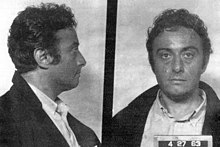
Wikipedia: Leonard Alfred Schneider (October 13, 1925 – August 3, 1966), better known by his stage name Lenny Bruce, was an American stand-up comedian, social critic, satirist, and screenwriter. He was renowned for his open, free-style and critical form of comedy which integrated satire, politics, religion, sex, and vulgarity. His 1964 conviction in an obscenitytrial was followed by a posthumous pardon, the first in New York State history, by then-Governor George Pataki in 2003. He paved the way for future outspoken counterculture-era comedians, and his trial for obscenity is seen as a landmark for freedom of speech in the United States...
...On October 4, 1961, Bruce was arrested for obscenity at the Jazz Workshop in San Francisco; he had used the wordcocksucker and riffed that "to is a preposition, come is a verb", that the sexual context of come is so common that it bears no weight, and that if someone hearing it becomes upset, he "probably can't come". Although the jury acquitted him, other law enforcement agencies began monitoring his appearances, resulting in frequent arrests under charges of obscenity...

...Bruce was arrested again in 1961... ...The specification this time was that the comedian had used the word schmuck, an insulting Yiddish term that is an obscene term for penis...
...On December 5, 1962, Bruce was arrested at the legendary Gate of Horn folk club in Chicago...
...In April 1964, he appeared twice at the Cafe Au Go Go in Greenwich Village with undercover police detectives in the audience. He was arrested along with the club owners, Howard and Elly Solomon, who were arrested for allowing an obscene performance to take place. On both occasions, he was arrested after leaving the stage, the complaints again pertaining to his use of various obscenities...
...On December 23, 2003, 37 years after his death, New York Governor George Pataki granted Bruce a posthumous pardon for his obscenity conviction.

110. form of government

kitalálod-e, miért nincs jelentősége Samuel Johnson szerint? (szerinted igaza van?!) a fordítással komolyan tesztelheted magad, vajon tényleg haladó vagy-e (vagy csak beképzelt)...


 Segítség a nyelvtanhoz:
  * feltételes mód (videó)
  * feltételes mód_mondatok
  * inkább, mint_mondatok

Wikipedia: Samuel Johnson (18 September 1709 [O.S. 7 September] – 13 December 1784), often referred to as Dr Johnson, was an English writer who made lasting contributions to English literature as a poet, essayist, moralist, literary critic, biographer, editor and lexicographer. Johnson was a devout Anglican and committed Tory, and has been described as "arguably the most distinguished man of letters in English history"...
In 1746, a group of publishers approached Johnson with an idea about creating an authoritative dictionary of the English language. A contract with William Strahan and associates, worth 1,500 guineas, was signed on the morning of 18 June 1746. Johnson claimed that he could finish the project in three years. In comparison, the Académie Française had forty scholars spending forty years to complete their dictionary, which prompted Johnson to claim, "This is the proportion. Let me see; forty times forty is sixteen hundred. As three to sixteen hundred, so is the proportion of an Englishman to a Frenchman." Although he did not succeed in completing the work in three years, he did manage to finish it in eight. Some criticised the dictionary, including Thomas Babington Macaulay, who described Johnson as "a wretched etymologist," but according to Bate, the Dictionary "easily ranks as one of the greatest single achievements of scholarship, and probably the greatest ever performed by one individual who laboured under anything like the disadvantages in a comparable length of time."...
...The Dictionary was finally published in April 1755, with the title page acknowledging that Oxford had awarded Johnson a Master of Arts degree in anticipation of the work. The dictionary as published was a huge book. Its pages were nearly 18 inches (46 cm) tall, and the book was 20 inches (51 cm) wide when opened; it contained 42,773 entries, to which only a few more were added in subsequent editions, and it sold for the extravagant price of £4 10s, perhaps the rough equivalent of £350 today. An important innovation in English lexicography was to illustrate the meanings of his words by literary quotation, of which there were approximately 114,000. The authors most frequently cited include William Shakespeare, John Milton and John Dryden. It was years beforeJohnson's Dictionary, as it came to be known, turned a profit. Authors' royalties were unknown at the time, and Johnson, once his contract to deliver the book was fulfilled, received no further money from its sale. Years later, many of its quotations would be repeated by various editions of the Webster's Dictionary and the New English Dictionary.

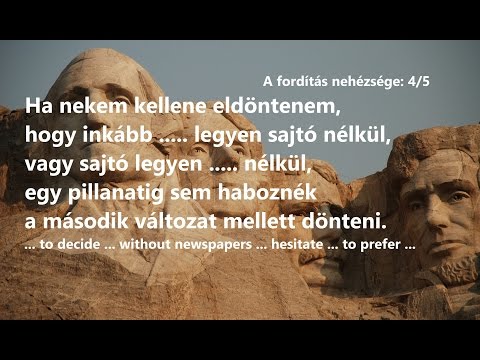
100. newspapers


 Segítség a nyelvtanhoz:
  * feltételes mód (videó)
  * feltételes mód_mondatok
  * kellene, nem szabadna (videó)
  * kellene, nem szabadna_mondatok
  * vajon_mondatok

Wikipedia: Thomas Jefferson (April 13 [O.S. April 2] 1743 – July 4, 1826) was an American Founding Father who was principal author of the Declaration of Independence (1776). He was elected the second Vice President of the United States (1797–1801), serving under John Adams and in 1800 was elected third President (1801–09). Jefferson was a proponent of democracy, republicanism, and individual rights, which motivated American colonists to break from Great Britain and form a new nation. He produced formative documents and decisions at both the state and national level...
...Jefferson was the primary author of the Declaration of Independence. At age 33 he was one of the youngest delegates to the Second Continental Congress beginning in 1775 at the outbreak of the American Revolutionary War where a formal declaration of independence from Britain was overwhelmingly favored. Jefferson chose his words for the Declaration in June 1775 shortly after the war had begun where the idea of Independence from Britain had long since become popular among the colonies. He was also inspired by the Enlightenment ideals of the sanctity of the individual as well as the writings of Locke and Montesquieu...
...The declaration was introduced on Friday, June 28, and congress began debate over its contents on Monday, July 1. resulting in the omission of a fourth of the text, including a passage critical of King George III and the slave trade. While Jefferson resented the changes, he did not speak publicly about the revisions. On July 4, 1776, the Congress ratified the Declaration, and delegates signed it on August 2 and in doing so were committing an act of treason against the Crown. Jefferson's preamble is regarded as an enduring statement of human rights, and the phrase "all men are created equal" has been called "one of the best-known sentences in the English language" containing "the most potent and consequential words in American history"...

84. government


 Segítség a nyelvtanhoz:
  * általános alany_mondatok

Wikipedia: Harry S. Truman (May 8, 1884 – December 26, 1972) was the 33rd President of the United States (1945–53), an American politician of the Democratic Party. He served as a United States Senator from Missouri (1935–45) and briefly as Vice President (1945) before he succeeded to the presidency on April 12, 1945 upon the death of Franklin D. Roosevelt. He was president during the final months of World War II, making the decision to drop the atomic bomb onHiroshima and Nagasaki. Truman was elected in his own right in 1948. He presided over an uncertain domestic scene as America sought its path after the war, and tensions with the Soviet Union increased, marking the start of the Cold War...
...On June 24, 1948, the Soviet Union blocked access to the three Western-held sectors of Berlin. The Allies had never negotiated a deal to guarantee supply of the sectors deep within the Soviet-occupied zone. The commander of the American occupation zone in Germany, General Lucius D. Clay, proposed sending a large armored column across the Soviet zone to West Berlin with instructions to defend itself if it were stopped or attacked. Truman believed this would entail an unacceptable risk of war. He approved Ernest Bevin's plan to supply the blockaded city by air. On June 25, the Allies initiated the Berlin Airlift, a campaign that delivered food and other supplies, such as coal, using military aircraft on a massive scale. Nothing like it had ever been attempted before, and no single nation had the capability, either logistically or materially, to have accomplished it. The airlift worked; ground access was again granted on May 11, 1949. Nevertheless, the airlift continued for several months after that. The Berlin Airlift was one of Truman's great foreign policy successes; it significantly aided his election campaign in 1948...
...According to historian Daniel R. McCoy in his book on the Truman presidency, Harry Truman himself gave a strong and far-from-incorrect impression of being a tough, concerned and direct leader. He was occasionally vulgar, often partisan, and usually nationalistic... On his own terms, Truman can be seen as having prevented the coming of a third world war and having preserved from Communist oppression much of what he called the free world. Yet clearly he largely failed to achieve his Wilsonian aim of securing perpetual peace, making the world safe for democracy, and advancing opportunities for individual development internationally.

62. solution


 segítség a nyelvtanhoz:
  * összehasonlítás és fokozás_mondatok

Wikipedia: Milton Friedman (July 31, 1912 – November 16, 2006) was an American economist who received the 1976 Nobel Memorial Prize in Economic Sciences for his research on consumption analysis, monetary history and theory and the complexity of stabilization policy. With George Stigler and others, Friedman was among the intellectual leaders of the second generation of Chicago price theory, a methodological movement at the University of Chicago's Department of Economics, Law School, and Graduate School of Business from the 1940s onward. Several students and young professors that were recruited or mentored by Friedman at Chicago went on to become leading economists; they include Gary Becker, Robert Fogel, and Robert Lucas, Jr...