120. fresh...

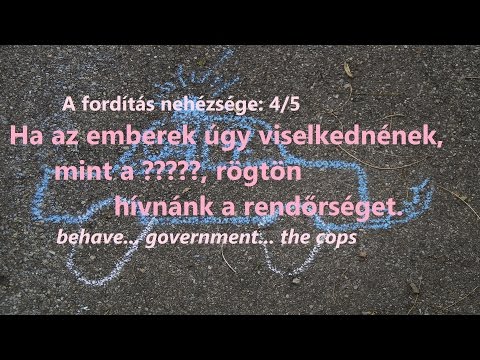
hm... ha kitalálod melyik szó hiányzik, megtudod, hogy pont ez az Off Course Angol véleménye is a britek kilépéséről... (a fordítással meg vigyázz, mert a „miféle” megoldásánál akkor is elbakizhatod, ha haladó vagy!...)



 segítség a nyelvtanhoz:
  * milyen szép! micsoda férfi!_mondatok

David Cameron's resignation speech
Good morning everyone, the country has just taken part in a giant democratic exercise, perhaps the biggest in our history.
Over 33 million people from England, Scotland, Wales, Northern Ireland and Gibraltar have all had their say.
We should be proud of the fact that in these islands we trust the people for these big decisions.
We not only have a parliamentary democracy, but on questions about the arrangements for how we've governed there are times when it is right to ask the people themselves and that is what we have done.
The British people have voted to leave the European Union and their will must be respected.
I want to thank everyone who took part in the campaign on my side of the argument, including all those who put aside party differences to speak in what they believe was the national interest and let me congratulate all those who took part in the Leave campaign for the spirited and passionate case that they made.
The will of the British people is an instruction that must be delivered.
It was not a decision that was taken lightly, not least because so many things were said by so many different organisations about the significance of this decision.
So there can be no doubt about the result.
Across the world people have been watching the choice that Britain has made.
I would reassure those markets and investors that Britain's economy is fundamentally strong and I would also reassure Britons living in European countries and European citizens living here there will be no immediate changes in your circumstances.
There will be no initial change in the way our people can travel, in the way our goods can move or the way our services can be sold.
We must now prepare for a negotiation with the European Union.
This will need to involve the full engagement of the Scottish, Welsh and Northern Ireland governments to ensure that the interests of all parts of our United Kingdom are protected and advanced.
But above all this will require strong, determined and committed leadership.
I'm very proud and very honoured to have been Prime Minister of this country for six years.
I believe we've made great steps, with more people in work than ever before in our history, with reforms to welfare and education, increasing people's life chances, building a bigger and stronger society, keeping our promises to the poorest people in the world and enabling those who love each other to get married whatever their sexuality, but above all restoring Britain's economic strength.
And I'm grateful to everyone who's helped to make that happen.
I have also always believed that we have to confront big decisions, not duck them.
That is why we delivered the first coalition government in 70 years, to bring our economy back from the brink.
It's why we delivered a fair, legal and decisive referendum in Scotland.
And it's why I made the pledge to renegotiate Britain's position in the European Union and to hold the referendum on our membership and have carried those things out.
I fought this campaign in the only way I know how, which is to say directly and passionately what I think and feel - head, heart and soul.
I held nothing back, I was absolutely clear about my belief that Britain is stronger, safer and better off inside the European Union and I made clear the referendum was about this and this alone - not the future of any single politician including myself.
But the British people have made a very clear decision to take a different path and as such I think the country requires fresh leadership to take it in this direction.
I will do everything I can as Prime Minister to steady the ship over the coming weeks and months but I do not think it would be right for me to try to be the captain that steers our country to its next destination.
This is not a decision I've taken lightly but I do believe it's in the national interest to have a period of stability and then the new leadership required.
There is no need for a precise timetable today but in my view we should aim to have a new prime minister in place by the start of the Conservative Party conference in October.
Delivering stability will be important and I will continue in post as Prime Minister with my Cabinet for the next three months.
The Cabinet will meet on Monday, the Governor of the Bank of England is making a statement about the steps that the Bank and the Treasury are taking to reassure financial markets.
We will also continue taking forward the important legislation that we set before Parliament in the Queen's Speech.
And I have spoken to Her Majesty the Queen this morning to advise her of the steps that I am taking.
A negotiation with the European Union will need to begin under a new prime minister and I think it's right that this new prime minister takes the decision about when to trigger Article 50 and start the formal and legal process of leaving the EU.
I will attend the European Council next week to explain the decision the British people have taken and my own decision.
The British people have made a choice, that not only needs to be respected but those on the losing side of the argument - myself included - should help to make it work.
Britain is a special country - we have so many great advantages - a parliamentary democracy where we resolve great issues about our future through peaceful debate, a great trading nation with our science and arts, our engineering and our creativity, respected the world over.
And while we are not perfect I do believe we can be a model for the multi-racial, multi-faith democracy, that people can come and make a contribution and rise to the very highest that their talent allows.
Although leaving Europe was not the path I recommended, I am the first to praise our incredible strengths.
I said before that Britain can survive outside the European Union and indeed that we could find a way.
Now the decision has been made to leave, we need to find the best way and I will do everything I can to help.
I love this country and I feel honoured to have served it and I will do everything I can in future to help this great country succeed.

Thank you very much.
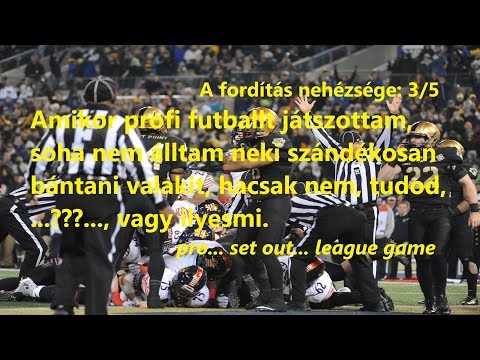
119. pro football

kitalálod, mikor tett mégis kivételt a profi? a fordítást inkább (kattints és) nézd meg, hátha úgysem sikerülne, még a dőlt betűs segítséggel sem...


 segítség a nyelvtanhoz:
  * igeidők (videó)
  * hacsak nem_mondatok
  * milyen és olyan, mint_mondatok

Wikipedia: Richard Marvin "Dick" Butkus (born December 9, 1942) is a former American football linebacker who played for the Chicago Bears of the National Football League (NFL). He was drafted in 1965 and is also widely regarded as one of the best and most durable linebackers of all time. Butkus played college football for the Fighting Illini at the University of Illinois. He became a member of the Pro Football Hall of Fame in 1979. He played nine seasons in the NFL for the Chicago Bears. Billed at 6 ft 3 in (1.91 m), 245 lb (111 kg), he was considered one of the most feared and intimidating linebackers of his time, being named the most feared tackler of all time by NFL.com in 2009...

...Butkus was selected to eight Pro Bowls and was all-league six times. In his rookie season, Butkus led the Bears in tackles, interceptions, forced fumbles, and fumble recoveries, and regularly led the team in these categories throughout his career. Butkus recovered 27 fumbles in his career, an NFL record at the time of his retirement. He was one of the most feared players of his era and even appeared on the cover of Sports Illustrated in 1970 with the caption "The Most Feared Man in the Game." He had one of his most productive seasons in 1970 with 132 tackles, 84 assists, 3 interceptions and 2 fumble recoveries. He was forced to retire after multiple knee injuries in 1973...

...One of Butkus' greatest strengths was his ability to rip the ball from a ball carrier's hands. Although back then the statistic was not kept, it has been noted that Butkus would certainly be one of the all-time leaders in the forced fumbles category.

118. hooligans

melyik hova illik a dőlt betűsök közül? (vigyázz, az egyik sehova...) a babakönnyű fordítás pedig szinte kezdőknek való, önvizsgálatra :) egyébként: használd a have igét!


 segítség a nyelvtanhoz:
  * nekem van, neked nincs_mondatok

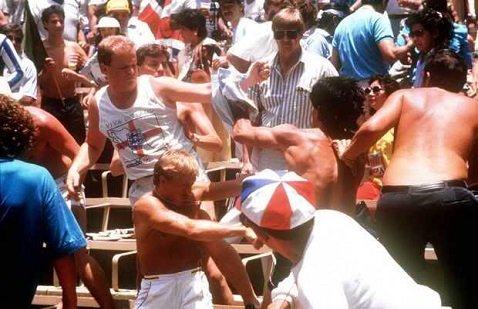
(www.football-hooligan.com)
Statistics
The number of football-related arrests in England and Wales fell last season, according to Home Office figures.
In the 2008/09 campaign, police made a total of 3,752 arrests at domestic and international football matches, a fall of 2% on the season before.
On average there was 1.18 arrests per game, and the Home Office say 354 people were arrested for violence. In all, 956 football banning orders were issued during the 2008/09 season, with 37 million people attending games.
In the Premier League, champions Manchester United had the most fans arrested - 185 in total. Second was relegated Newcastle United with 144 arrests and third was Everton with 139.
Fulham had the fewest fans arrested with just 13.
Supporters of League One Leeds United topped the banning order list, with 162, ahead of Championship side Cardiff City (124) and League One outfit Millwall (110).
Fans were generally well-behaved abroad - more than 105,000 fans travelled to 49 games in European club competitions last season but only 30 were arrested.
Source: BBC Sport - 22nd December 2009
Over five million journeys a year are undertaken on the rail network by football fans alone.
In 2008/09 there were just 51 serious football related incidents, down from 63 the previous year.
However, there were another 538 reported incidents of anti-social behaviour which impacted on other passengers and rail staff, up from 337 the year before.
In the 2008/09 season BTP officers made 838 arrests, the highest to date, up from 601 the previous year.
Source: British Transport Police - 2010

117. football

profi focista szájából a lényeg :) – a fordítás dögnehéz, elég lenne, ha a dőltbetűs sorban a kérdőjeleseket pótolni tudtad volna...


 Segítség a nyelvtanhoz:
  * feltételes mód (videó)
  * feltételes mód_mondatok
  * névelők_mondatok

Wikipedia: Garth Anthony Crooks, OBE (born 10 March 1958) is an English former professional footballer. He played for Stoke City, Tottenham Hotspur, Manchester United, West Bromwich Albion and Charlton Athletic. Throughout his career he was an active member of the Professional Footballers' Association and was elected the first black chairman of the union. He currently works for the BBC as a television pundit...
...In 1988, Crooks became the first black chairman of the Professional Footballers' Association but gave up the role after retiring in 1990. He first worked in the media as a match analyst at the 1982 and 1990 World Cups and later worked as Match of the Day's reporter at the England camp at Euro 2000 and the 2002 World Cup. In the late 1990s, Crooks became presenter of the political television show Despatch Box. In 1999 he was awarded an OBE in the Queen's Birthday Honoursfor his services to football punditry, specifically citing his ability to bring passion to football. He currently appears regularly on Final Score as a pundit and on rare occasions still appears on Match of the Day as a replacement for regular pundits Alan Shearer and Mark Lawrenson. He is occasionally seen interviewing players for BBC television after league football matches. He also names his team of the week (Premier League) each week on the BBC website.

116. sandwiches

nyilván te is a szendvicset választanád a ??? helyett?... a fordítás könnyűnek tűnik – ha megnézed, mihez jár nyelvtani segítség, tán nem is hibázol...


 Segítség a nyelvtanhoz:
  * kell, tilos_mondatok
  * talán, bizonyára_mondatok
  * névelők_mondatok

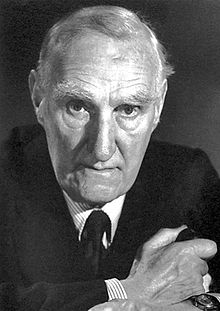
Wikipedia: John Boyd Orr, 1st Baron Boyd-Orr CH, DSO, MC, FRS (23 September 1880 – 25 June 1971), known as Sir John Boyd Orr from 1935 to 1949, was a Scottish teacher, doctor, biologist and politician who received the Nobel Peace Prize for his scientific research into nutrition and his work as the first Director-General of the United Nations Food and Agriculture Organization (FAO). He was the co-founder and the first President (1960–1971) of the World Academy of Art and Science (WAAS)...
...As an undergraduate in Glasgow, he explored the interior of the city, usually at weekends. He was shocked by what he found in the poverty-stricken slums and tenements, which then made up a large part of the city. Rickets was obvious among the children, malnutrition (in some cases, associated with drunkenness) was shown by many of the adults, and many of the aged were destitute. In his first teaching job after graduating M.A. in 1902, he was posted to a school in the slums. His first class was overcrowded, and the children ill-fed or actually hungry, inadequately clothed, visibly lousy and physically wretched. He resigned after a few days, realising that he could not teach children in such a condition, and that there was nothing he could do to relieve their misery...
...On leaving the university, he took a position as a ship's surgeon on a ship trading between Scotland and West Africa, choosing this job because it offered the possibility of paying off his bank overdraft faster than any other. He resigned after four months, when he had repaid the debt. He then tried general practice, working as a locum in the practice of his family doctor in Saltcoats, and was offered a partnership there. Realising that a career in medicine was not for him, he instead accepted the offer of a two-year Carnegie research scholarship, to work in E.P. Cathcart's laboratory. The work he began there covered malnutrition, protein andcreatine metabolism, the effect of water intake on nitrogenous metabolism in humans, and the energy expenditure of military recruits in training...
...Orr, by now Rector of the University of Glasgow, was elected as an independent Member of Parliament (MP) for the Combined Scottish Universities in a by-election in April 1945, and kept his seat at the general election shortly after. He resigned in 1946...
...After the Second World War, Boyd Orr resigned from the Rowett Institute, and took several posts, most notably at the FAO, where his comprehensive plans for improving food production and its equitable distribution failed to get the support of Britain and the US. He then resigned from the FAO and became director of a number of companies and proved a canny investor in the stock market, making a considerable personal fortune. When he received the Nobel Peace Prize in 1949, he donated the entire financial award to organizations devoted to world peace and a united world government...
...In 1960 Boyd Orr was elected the first president of the World Academy of Art and Science, which was set up by eminent scientists of the day concerned about the potential misuse of scientific discoveries, most especially nuclear weapons.

115. if people

ha az Off Course Angolon edződtél, akkor tudni fogod, mi hiányzik :) ...és akkor a feltételes mód sem fog gondot okozni – viszont vannak egyéb nehézségek...


 Segítség a nyelvtanhoz:
  * feltételes mód (videó)
  * feltételes mód_mondatok
  * milyen és olyan, mint_mondatok
  * általános alany_mondatok
  * névelők_mondatok

Wikipedia: Kelvin R. Throop (also 'Kelvin R. Throop III' or 'Kelvin Throop III') is a fictional character and collective pseudonym created by R. A. J. Phillips in a story which appeared in Analog Science Fiction and Science Fact magazine in July 1964. With the encouragement of editor John W. Campbell, Throop subsequently figured in additional stories by other authors. The archetypal Throop story finds him within a large bureaucracy which, solely by his acid-penned memos, he causes to self-destruct, whereupon he disappears until the next story. In mid-December 1984, Analog published a special Kelvin Throop humor edition. Numerous humorous epigrams attributed to Throop were published in Analog over a period of decades...

...Analog Science Fiction and Fact is an American science fiction magazine. As of 2015, it is the longest running continuously published magazine of that genre, the June 2015 issue being number 1,000.
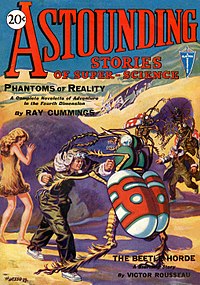
The first issue of Astounding Stories, January 1930

Initially published in 1930 in the United States as Astounding Stories as a pulp magazine, it has undergone several name changes, primarily toAstounding Science-Fiction in 1938, and Analog Science Fact & Fiction in 1960. In November 1992, its logo changed to use the term "Fiction and Fact" rather than "Fact & Fiction". It is in the library of the International Space Station. Spanning three incarnations since 1930, this is perhaps the most influential magazine in the history of the genre. It remains a fixture of the genre today...

114. the right

kitalálod-e, melyik az a fontos szó? a fordításhoz pedig nem árt haladónak lenned – és mindenképpen használd fel a dőlt betűs segítséget.


 Segítség a nyelvtanhoz:
  * felszólítás (videó)
  * felszólítás_mondatok
  * általános alany_mondatok
  * to + főnévi igenév_mondatok

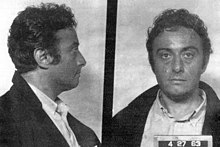
Wikipedia: Leonard Alfred Schneider (October 13, 1925 – August 3, 1966), better known by his stage name Lenny Bruce, was an American stand-up comedian, social critic, satirist, and screenwriter. He was renowned for his open, free-style and critical form of comedy which integrated satire, politics, religion, sex, and vulgarity. His 1964 conviction in an obscenitytrial was followed by a posthumous pardon, the first in New York State history, by then-Governor George Pataki in 2003. He paved the way for future outspoken counterculture-era comedians, and his trial for obscenity is seen as a landmark for freedom of speech in the United States...
...On October 4, 1961, Bruce was arrested for obscenity at the Jazz Workshop in San Francisco; he had used the wordcocksucker and riffed that "to is a preposition, come is a verb", that the sexual context of come is so common that it bears no weight, and that if someone hearing it becomes upset, he "probably can't come". Although the jury acquitted him, other law enforcement agencies began monitoring his appearances, resulting in frequent arrests under charges of obscenity...

...Bruce was arrested again in 1961... ...The specification this time was that the comedian had used the word schmuck, an insulting Yiddish term that is an obscene term for penis...
...On December 5, 1962, Bruce was arrested at the legendary Gate of Horn folk club in Chicago...
...In April 1964, he appeared twice at the Cafe Au Go Go in Greenwich Village with undercover police detectives in the audience. He was arrested along with the club owners, Howard and Elly Solomon, who were arrested for allowing an obscene performance to take place. On both occasions, he was arrested after leaving the stage, the complaints again pertaining to his use of various obscenities...
...On December 23, 2003, 37 years after his death, New York Governor George Pataki granted Bruce a posthumous pardon for his obscenity conviction.

113. a job

the last bit of a strong Ali week: a bokszoló (Muhammad Ali) hitvallása – be tudod fejezni? a fordítás meg sima ügy – bár egy hibát szinte biztosan elkövetsz...


  Segítség a nyelvtanhoz:
  * igeidők (videó)
  * névelők_mondatok

(www.biography.com)
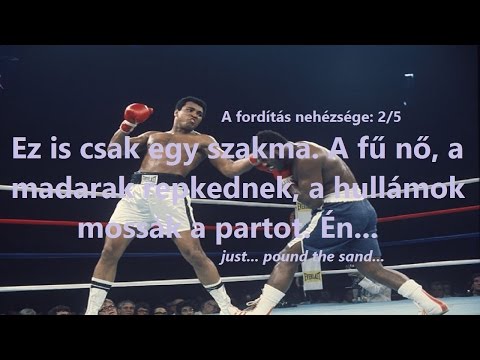
Arguably boxing's most celebrated athlete, heavyweight champion Muhammad Ali was also known for his public stance against the Vietnam War and his longtime battle with Parkinson's disease...
...Born Cassius Clay in Louisville, Kentucky, in 1942, Muhammad Ali became an Olympic gold medalist in 1960 and the world heavyweight boxing champion in 1964. Following his suspension for refusing military service, Ali reclaimed the heavyweight title two more times during the 1970s, winning famed bouts against Joe Frazier and George Foreman along the way. Diagnosed with Parkinson's disease in 1984, Ali devoted much of his time to philanthropy, earning the Presidential Medal of Freedom in 2005. He died on June 3, 2016, in Phoenix, Arizona...
...In his retirement, Ali devoted much of his time to philanthropy. He announced that he had Parkinson's disease in 1984, a degenerative neurological condition, and was involved in raising funds for the Muhammad Ali Parkinson Center in Phoenix, Arizona. Over the years, Ali also supported the Special Olympics and the Make-A-Wish Foundation, among other organizations. In 1996, he lit the Olympic cauldron at the Summer Olympic Games in Atlanta, an emotional moment in sports history...
...Ali traveled to numerous countries, including Mexico and Morocco, to help out those in need. In 1998, he was chosen to be a United Nations Messenger of Peace because of his work in developing nations.  

112. Mr Ali

nem fogod kitalálni, hogyan vágott vissza poénosan a légikisasszony a viccesen nagyképű Alinak! a fordításban csak a felszólítást és „sem”-et kell jól csinálnod, ráadásul itt végre tök laza lehetsz, például kétszer is duplán tagadhatsz :)


  Segítség a nyelvtanhoz:
  * felszólítás (videó)
  * felszólítás_mondatok
  * sem, én sem, én is_mondatok

Wikipedia: ...Vietnam War and resistance to the draft
Ali registered for conscription in the United States military on his 18th birthday and was listed as 1-A in 1962. In 1964, he was reclassified as Class 1-Y (fit for service only in times of national emergency) after two mental tests found his IQ was 78 (16th percentile), well below the armed force's 30th-percentile threshold. (He was quoted as saying, "I said I was the greatest, not the smartest!") By early 1966, the army lowered its standards to permit soldiers above the 15th percentile and Ali was again classified as 1-A. This classification meant he was now eligible for the draft and induction into the United States Army during a time when the U.S. was involved in the Vietnam War.
When notified of this status, Ali declared that he would refuse to serve in the army and publicly considered himself a conscientious objector. Ali stated: "War is against the teachings of the Qur'an. I'm not trying to dodge the draft. We are not supposed to take part in no wars unless declared by Allah or The Messenger. We don't take part in Christian wars or wars of any unbelievers." He famously stated: "Man, I ain't got no quarrel with them Viet Cong." Ali elaborated: "Why should they ask me to put on a uniform and go ten thousand miles from home and drop bombs and bullets on brown people in Vietnam while so-called Negro people in Louisville are treated like dogs and denied simple human rights?"
Appearing for his scheduled induction into the U.S. Armed Forces on April 28, 1967, in Houston, Ali refused three times to step forward at the call of his name. An officer warned him he was committing a felony punishable by five years in prison and a fine of $10,000. Once more, Ali refused to budge when his name was called. As a result, he was arrested. On the same day the New York State Athletic Commission suspended his boxing license and stripped him of his title. Other boxing commissions followed suit. Ali would not be able to obtain a license to box in any state for over three years.
At the trial on June 20, 1967, after only 21 minutes of deliberation, the jury found Ali guilty. After a Court of Appeals upheld the conviction, the case went to the U.S. Supreme Court.
In the years between the Appellate Court decision and the Supreme Court verdict, Ali remained free. As public opinion began turning against the war and the Civil Rights Movement continued to gather momentum, Ali became a popular speaker at colleges and universities across the country, rare if not unprecedented for a boxer. At Howard University, for example, he gave his popular "Black Is Best" speech to 4,000 cheering students and community intellectuals, after he was invited to speak by sociology professor Nathan Hare on behalf of the Black Power Committee, a student protest group.
On June 28, 1971, the Supreme Court of the United States in Clay v. United States overturned Ali's conviction by a unanimous 8–0 decision (Justice Thurgood Marshall recused himself, as he had been the U.S. Solicitor General at the time of Ali's conviction). The decision was not based on, nor did it address, the merits of Ali's claims per se; rather, the Court held that since the Appeal Board gave no reason for the denial of a conscientious objector exemption to Ali, and that it was therefore impossible to determine which of the three basic tests for conscientious objector status offered in the Justice Department's brief that the Appeals Board relied on, Ali's conviction must be reversed.

111. Muhammad Ali

szerény képzelőerőddel is ki fogod találni, melyik szó hiányzik (adok dőlt betűs segítséget). a fordításban viszont szinte biztosan elkövetsz egy hibát, még ha haladósnak is érzed magad...


 Segítség a nyelvtanhoz:
  * általános alany_mondatok
  * összehasonlítás és fokozás_mondatok
  * to + főnévi igenév_mondatok

(www.nbcnews.com – Jun 4 2016)
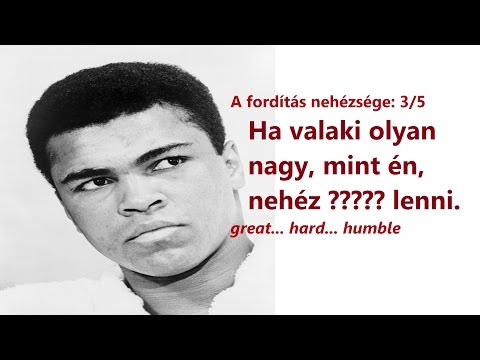
Muhammad Ali, the silver-tongued boxer and civil rights champion who famously proclaimed himself "The Greatest" and then spent a lifetime living up to the billing, is dead.
Ali died Friday at a Phoenix-area hospital, where he had spent the past few days being treated for respiratory complications, a family spokesman confirmed to NBC News. He was 74.
"After a 32-year battle with Parkinson's disease, Muhammad Ali has passed away at the age of 74. The three-time World Heavyweight Champion boxer died this evening," Bob Gunnell, a family spokesman, told NBC News...

...In recent years, Ali's health began to suffer dramatically. There was a death scare in 2013, and last year he was rushed to the hospital after being found unresponsive. He recovered and returned to his new home in Arizona.
In his final years, Ali was barely able to speak. Asked to share his personal philosophy with NPR in 2009, Ali let his wife read his essay: "I never thought of the possibility of failing, only of the fame and glory I was going to get when I won," Ali wrote. "I could see it. I could almost feel it. When I proclaimed that I was the greatest of all time, I believed in myself, and I still do."

110. form of government

kitalálod-e, miért nincs jelentősége Samuel Johnson szerint? (szerinted igaza van?!) a fordítással komolyan tesztelheted magad, vajon tényleg haladó vagy-e (vagy csak beképzelt)...


 Segítség a nyelvtanhoz:
  * feltételes mód (videó)
  * feltételes mód_mondatok
  * inkább, mint_mondatok

Wikipedia: Samuel Johnson (18 September 1709 [O.S. 7 September] – 13 December 1784), often referred to as Dr Johnson, was an English writer who made lasting contributions to English literature as a poet, essayist, moralist, literary critic, biographer, editor and lexicographer. Johnson was a devout Anglican and committed Tory, and has been described as "arguably the most distinguished man of letters in English history"...
In 1746, a group of publishers approached Johnson with an idea about creating an authoritative dictionary of the English language. A contract with William Strahan and associates, worth 1,500 guineas, was signed on the morning of 18 June 1746. Johnson claimed that he could finish the project in three years. In comparison, the Académie Française had forty scholars spending forty years to complete their dictionary, which prompted Johnson to claim, "This is the proportion. Let me see; forty times forty is sixteen hundred. As three to sixteen hundred, so is the proportion of an Englishman to a Frenchman." Although he did not succeed in completing the work in three years, he did manage to finish it in eight. Some criticised the dictionary, including Thomas Babington Macaulay, who described Johnson as "a wretched etymologist," but according to Bate, the Dictionary "easily ranks as one of the greatest single achievements of scholarship, and probably the greatest ever performed by one individual who laboured under anything like the disadvantages in a comparable length of time."...
...The Dictionary was finally published in April 1755, with the title page acknowledging that Oxford had awarded Johnson a Master of Arts degree in anticipation of the work. The dictionary as published was a huge book. Its pages were nearly 18 inches (46 cm) tall, and the book was 20 inches (51 cm) wide when opened; it contained 42,773 entries, to which only a few more were added in subsequent editions, and it sold for the extravagant price of £4 10s, perhaps the rough equivalent of £350 today. An important innovation in English lexicography was to illustrate the meanings of his words by literary quotation, of which there were approximately 114,000. The authors most frequently cited include William Shakespeare, John Milton and John Dryden. It was years beforeJohnson's Dictionary, as it came to be known, turned a profit. Authors' royalties were unknown at the time, and Johnson, once his contract to deliver the book was fulfilled, received no further money from its sale. Years later, many of its quotations would be repeated by various editions of the Webster's Dictionary and the New English Dictionary.

109. illusion

ha elmúltál 18, sőt, akkor kitalálhatod, mi lehet a hiányzó szó... segíthet, ha elárulom, hogy a forrás: Woody Allen?... aztán a fordításhoz adok kis segítséget, de csak akkor ugorj neki, ha haladó (vagy nagyképű) vagy :)


 segítség a nyelvtanhoz:
  * igeidők (videó)
  * mintha_mondatok

(from Woody Allen: The Stand-Up Years 1964-1968)
Gonna tell a love story now, 'cause you have background material on me. Ah, this occurred before I was married, a long time ago, out in Manhattan, I was in Manhattan. I was at City Center, this was ages ago, I was watching a ballet at City Center, and I'm not a ballet fan at all, but they were doing the dying swan, and there was a rumour, that some bookmakers had drifted into town from upstate New York, and that they had fixed the ballet. Apparently there was a lot of money bet on the swan to live. And I look at the box, and I see a girl, and my weak spot is women, ah, so I always think someday they're gonna make me a birthday party, and wheel out a tremendous birthday cake, and a giant, naked woman is gonna leap out of the cake and hurt me and leap back in the cake.
So I pick up this girl, I was very glib, and she was a brilliant girl, she was a Bennington girl, studying at Bennington to be a woman male nurse at a four-year program, working on a term paper on the increasing incidents of heterosexuality amongst homosexuals. The girl was a swinger, however, I must....The girl was brought up in Darien, Conneticut, and when she was younger, she had a little brother about six years old, eight years...his parents sent the kid to military school. And while he was there, he stole jam or something, and they caught him, and they wanted to do things right, 'cause it was military school, so they held a court martial there. They found the kid guilty. They shot him. They returned to his parents half the tuition.
Meanwhile, I was running amok with his sister, his sister was fabulous, she was a great, great, blonde, and she had tatooed on the inner surface of her thigh, the words 'Bird lives', which, unfortunately, I was never privileged to see in the relationship, but had it been printed in Braille, I would have had a great thing going with her. We used to go up to her apartment late at night, and all her beatnik friends would be sitting crosslegged on each other there, and they would be trying to make opium out of the poppies given out by veterans on street corners. She used to plug in her twelve and a half dollar hi-fi set, y'know, with the teakwood needle, and put on the record albums on of Marcel Marceau, y'know, just...
She crushed me, I...Every time I tell the story, I'm reminded...I was what you would call, not a intellectual, up to her...she was...I was thrown out of college, and when I was thrown out of college I got a job on Madison Avenue in New york, a real dyed-in-the-wool advertising agency on Madison Avenue, wanted a man to come in, and they pay him ninetyfive dollars a week, and to sit in their office, and to look jewish. They wanted to prove to the outside world, that they would hire minority groups, y'know. So I was the one they hired, y'know. I was the show jew at the agency. I tried to look jewish desperately, y'know. I used to read my memos from right to left all the time. They fired me finally, 'cause I took off too many jewish holidays.
108. God once

na, mit gondolsz, hogy fejezi be ezt egy istentelenül profi politikus?... és hogyan oldja meg, hogy – nő létére – ne kelljen a „he” személyes névmást használnia? nem a nyelvtan itt a nehéz :)


 segítség a nyelvtanhoz:
  * igeidők (videó)
  * jelentésfüggő folyamatostalanság

Wikipedia: Margaret Hilda Thatcher, Baroness Thatcher, LG, OM, PC, FRS, FRIC (née Roberts; 13 October 1925 – 8 April 2013) was a British stateswoman and politician who was the Prime Minister of the United Kingdom from 1979 to 1990 and the Leader of the Conservative Party from 1975 to 1990. She was the longest-serving British Prime Minister of the 20th century and is currently the only woman to have held the office. A Soviet journalist dubbed her the "Iron Lady", a nickname that became associated with her uncompromising politics and leadership style. As Prime Minister, she implemented policies that have come to be known as Thatcherism.
Originally a research chemist before becoming a barrister, Thatcher was elected Member of Parliament (MP) for Finchley in 1959. Edward Heath appointed her Secretary of State for Education and Science in his 1970 government. In 1975, Thatcher defeated Heath in the Conservative Party leadership election to become Leader of the Opposition and became the first woman to lead a major political party in the United Kingdom. She became Prime Minister after winning the 1979 general election...
...Thatcher became Prime Minister on 4 May 1979. Arriving at 10 Downing Street, she said, in a paraphrase of St. Francis of Assisi's prayer Make Me an Instrument of Your Peace:

Where there is discord, may we bring harmony. Where there is error, may we bring truth. Where there is doubt, may we bring faith. And where there is despair, may we bring hope.

107. women or drink

kitalálod-e, melyik nációról mondta ezt egy közülük való?
a fordításban hogyan oldanád meg a dőlt betűsöket?


 segítség a nyelvtanhoz:
  * előnyben részesít_mondatok

nytimes.com (April 22, 1991)
Sean O'Faolain, an Irish writer who was considered a master of the short story, died on Saturday in the Dublin nursing home where he had lived for two years. He was 91 years old...
...Mr. O'Faolain, whose original name was John Francis Whelan, was born in County Cork on Feb. 22, 1900, the son of a constable. "From an early age he was inhibited," Gordon Henderson wrote in his Dictionary of Literary Biography, by "his father's unquestioning respect for authority, his mother's excessive piety, and the preoccupation both had with rising above their peasant-farmer origins."...
...For more than 60 years, Mr. O'Faolain (pronounced oh-FAY-lawn) won over readers with short stories that were known for their artful blend of lyricism, humor and irony. A prolific writer, he also wrote novels, biographies of leading Irish figures, plays and travelogues...
..."As I see it," he said, "a short story, if it is a good story, is like a child's kite -- a small wonder, a brief, bright moment." Ireland With Some Irony...
..."Everything I write is romantic. But I know too that I have to put in -- that my only hope of sanity and balance is to put in -- irony. Irony is the only element that saves me from being soppy."...
...The most traumatic event of his youth was the Easter rebellion of 1916. He first opposed the uprising, but soon became enraged by the brutality of the British forces in crushing it and executing its leaders. He studied Gaelic, changed his name and joined in anti-British activities, but avoided extreme violence, observing later, "To have cast me for the role of a gunman would have been like casting me as a bull-fighter." Stories of the Troubles...
..."Like Joyce and O'Connor," Gordon Henderson wrote, Mr. O'Faolain "took the short story as he received it from Maupassant and Chekhov and transformed it into something uniquely his own and uniquely Irish."...

106. how much

a söralátétnél is egyszerűbb adóbevallás (a dőlt betűs segítségből kitalálhatod a poént)...
a fordításhoz már nem sokkal a kezdő szint után is nekirugaszkodhatsz.


 segítség a nyelvtanhoz:
  * igeidők (videó)
  * felszólítás (videó)
  * felszólítás_mondatok

Wikipedia: Income taxes are used in most countries around the world. The tax systems vary greatly and can be progressive, proportional, or regressive, depending on the type of tax. Comparison of tax rates around the world is a difficult and somewhat subjective enterprise. Tax laws in most countries are extremely complex, and tax burden falls differently on different groups in each country and sub-national unit. Of course, services provided by governments in return for taxation also vary, making comparisons all the more difficult.
Countries that tax income generally use one of two systems: territorial or residential. In the territorial system, only local income – income from a source inside the country – is taxed. In the residential system, residents of the country are taxed on their worldwide (local and foreign) income, while nonresidents are taxed only on their local income. In addition, a very small number of countries, notably the United States, also tax their nonresident citizens on worldwide income...
...The first income tax is generally attributed to Egypt. In the early days of the Roman Republic, public taxes consisted of modest assessments on owned wealth and property. The tax rate under normal circumstances was 1% and sometimes would climb as high as 3% in situations such as war. These modest taxes were levied against land, homes and other real estate, slaves, animals, personal items and monetary wealth. The more a person had in property, the more tax they paid. Taxes were collected from individuals...
...One of the first recorded taxes on income was the Saladin tithe introduced by Henry II in 1188 to raise money for the Third Crusade. The tithe demanded that each layperson in England and Wales be taxed one tenth of their personal income and moveable property...
...The inception date of the modern income tax is typically accepted as 1799, at the suggestion of Dr Beeke, Dean of Bristol. This income tax was introduced into Great Britain by Prime Minister William Pitt the Younger in his budget of December 1798, to pay for weapons and equipment for the French Revolutionary War.
...The US federal government imposed the first personal income tax, on August 5, 1861, to help pay for its war effort in the American Civil War (3% of all incomes over US$800) (equivalent to $21,070 in 2015). This tax was repealed and replaced by another income tax in 1862. It was only in 1894 that the first peacetime income tax was passed through the Wilson-Gorman tariff. The rate was 2% on income over $4000 (equivalent to $109,400 in 2015), which meant fewer than 10% of households would pay any. The purpose of the income tax was to make up for revenue that would be lost by tariff reductions. In 1913, the Sixteenth Amendment to the United States Constitution made the income tax a permanent fixture in the U.S. tax system. In fiscal year 1918, annual internal revenue collections for the first time passed the billion-dollar mark, rising to $5.4 billion by 1920.

105. if you

ha igazán „romantikus alkat” vagy, tudod, mi hiányzik... a fordítást sem bakizod el, ha megnézted már az Off Course Angol feltételes mód videóját.


 Segítség a nyelvtanhoz:
  * feltételes mód (videó)
  * feltételes mód_mondatok
  * is, szintén_mondatok

Wikipedia: Mental As Anything are an Australian new wave/pop-rock band formed at an art school in Sydney in 1976. Its most popular line-up (which lasted from 1977-1999) was Martin Plaza (birth name Martin Murphy) on vocals and guitar; Reg Mombassa (birth name Chris O'Doherty) on lead guitar and vocals; his brother Peter "Yoga Dog" O'Doherty onbass guitar and vocals; Wayne "Bird" Delisle (birth name David Twohill) on drums; and Andrew "Greedy" Smith on vocals, keyboards and harmonica. Their original hit songs were generated by Mombassa, O'Doherty, Plaza and Smith, either individually or collectively; they also hit the Australian charts with covers of songs by Roy Orbison, Elvis Presley and Chuck Berry.
Their top ten Australian singles are "If You Leave Me, Can I Come Too?" and "Too Many Times" (both from 1981), "Live It Up" (1985) and "Rock and Roll Music" (1988). Internationally, "Too Many Times" made the Canadian top 40 in 1982, and "Live It Up" peaked at No. 3 in UK, No. 4 in Norway, and No. 6 in Germany, after it featured in the 1986 Australian film "Crocodile" Dundee...
...Mental As Anything's music is characterised by poppy, accessible and well-crafted melodies and lyrics, and their work showcases an ironic, satirical and self-deprecating sense of humour. They are a typically "Australian" rock group, with their music and their satirical, good-time image deeply rooted in the milieu of Australian suburbia, despite the fact that two key members (the O'Doherty brothers) were in fact immigrants from New Zealand. The group's art school background and visual design skills also made them pioneers of the music video form in Australia in the late 1970s and early 1980s, and their videos rank as some of the funniest and most imaginative produced in Australia at that time.
Mental As Anything is arguably comparable with contemporaneous British acts Madness, Squeeze, XTC and Nick Lowe in that their classic pop meets new wave music is typically delivered with a quirky, ironic sense of humour and a decidedly local flavour.

104. crime

Na, tudod-e mi az, ami a bűnözésnél is kifizetődőbb? A fordításhoz nem kell nagyon haladónak lenned (legalábbis ha tudsz már bánni az igeidőkkel.)


 segítség a nyelvtanhoz:
  * igeidők (videó)
  * is, szintén_mondatok

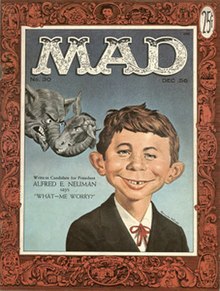
Wikipedia: Alfred E. Neuman is the fictitious mascot and cover boy of Mad, an American humor magazine. The face had drifted through U.S. pictography for decades before being claimed by Mad editor Harvey Kurtzman, and later named by the magazine's second editor Al Feldstein. He appeared occasionally in the early seasons of MADtv during sketches and interstitials and briefly appeared in the animated TV series Mad.
Since his debut in Mad, Neuman's likeness has appeared on the cover of all but a handful of the magazine's 500 issues, distinguished by jug ears, a missing front tooth, and one eye lower than the other. His face is rarely seen in profile; he has virtually always been shown in front view, directly from behind, or in silhouette. Harvey Kurtzman first spotted the image on a postcard pinned to the office bulletin board of Ballantine Books editor Bernard Shir-Cliff. "It was a face that didn't have a care in the world, except mischief," recalled Kurtzman. Shir-Cliff was later a contributor to various magazines created by Kurtzman...
When Al Feldstein took over as Mad's editor in 1956, he seized upon the face: I decided that I wanted to have this visual logo as the image of Mad, the same way that corporations had the Jolly Green Giant and the dog barking at the gramophone for RCA. This kid was the perfect example of what I wanted. So I put an ad in the New York Times that said, "National magazine wants portrait artist for special project". In walked this little old guy in his sixties named Norman Mingo, and he said, "What national magazine is this?" I said “Mad,” and he said, "Goodbye." I told him to wait, and I dragged out all these examples and postcards of this idiot kid, and I said, "I want a definitive portrait of this kid. I don't want him to look like an idiot — I want him to be loveable and have an intelligence behind his eyes. But I want him to have this devil-may-care attitude, someone who can maintain a sense of humor while the world is collapsing around him." I adapted and used that portrait, and that was the beginning.

103. step down

hm... szerinted mi lehet még lejjebb, mint az újságíróskodás? ha már haladósnak hiszed magad, próbáld meg lefordítani, hátha megy a dőlt betűs segítség felhasználásával...


 Segítség a nyelvtanhoz:
  * -ing-es alak_mondatok
  * képes, tud_mondatok

Wikipedia: James Allen "Jim" Hightower (born January 11, 1943) is an American syndicated columnist, progressive political activist, and author who served from 1983 to 1991 as the elected commissioner of the Texas Department of Agriculture...
...In recent years, Hightower has advocated for industrial hemp as a sustainable agricultural crop. Hightower talked about American farmers being unable to grow hemp due to the current policy of prohibition saying, "You can buy these hemp products, but – here comes the goofiness – our farmers are not allowed to grow the hemp! Instead, it comes from Canada, China, and elsewhere." He goes on to explain, "Our nation is the world's biggest consumer of hemp products (from rope to shampoo, building materials to food), yet the mad masters of our insane "drug war" have lumped hemp and marijuana together as "Schedule 1 controlled substances" – making our Land of the Free the world's only industrialized country that bans farmers from growing this benign, profitable, job-creating, and environmentally-beneficial, plant."...
...The "Doug Jones Average," a concept created by Jim Hightower, is the proposal that in order to check the true health of the American economy, it is less useful to look at the Dow Jones Industrial Average than it is to check up on how Doug Jones down the street is doing. If Doug Jones is on welfare, cannot feed his family, is blowing his savings, and is three weeks behind on his bills, the Doug Jones average is "down." If Doug just got a raise, can pay his bills and Doug and his family are looking into owning a nice but not too expensive house, the Doug Jones average is "up."

102. Alcatraz

válassz kedvedre: ki illik a pontok helyére? (az eredetit úgysem találod ki.) a fordításhoz szükséged lehet az Off Course Angol nyelvtan-videókra...


 Segítség a nyelvtanhoz:
  * feltételes mód (videó)
  * feltételes mód_mondatok
  * kellene, nem szabadna (videó)
  * kellene, nem szabadna_mondatok

Wikipedia: The United States Disciplinary Barracks on Alcatraz was acquired by the United States Department of Justice on October 12, 1933, and the island became a federal prison in August 1934. Alcatraz was designed to hold prisoners who continuously caused trouble at other federal prisons. At 9:40 am in the morning of August 11, 1934, the first batch of 137 prisoners arrived at Alcatraz, arriving by railroad from the United States Penitentiary in Leavenworth, Kansas at Santa Venetia, California, before being escorted to Alcatraz, handcuffed in high security coaches and guarded by some 60 special FBI agents, U.S. Marshals and railway security officials. Most of the prisoners were notorious bank robbers and murderers. The prison initially had a staff of 155, including the first warden James A. Johnston and associate warden J. E. Shuttleworth, both considered to be "iron men". The staff were highly trained in security, but not rehabilitation.
During the 29 years it was in use, the jail held some of the most notorious criminals in American history, such as Al Capone, Robert Franklin Stroud (the Birdman of Alcatraz), George "Machine Gun" Kelly, Bumpy Johnson, Rafael Cancel Miranda (a member of the Puerto Rican Nationalist Party who attacked theUnited States Capitol building in 1954), Mickey Cohen, Arthur R. "Doc" Barker, James "Whitey" Bulger, and Alvin "Creepy" Karpis (who served more time at Alcatraz than any other inmate). It also provided housing for the Bureau of Prisons staff and their families.
During its 29 years of operation, the penitentiary claimed that no prisoner successfully escaped. A total of 36 prisoners made 14 escape attempts, two men trying twice; 23 were caught alive, six were shot and killed during their escape, two drowned, and five are listed as "missing and presumed drowned". The most violent occurred on May 2, 1946, when a failed escape attempt by six prisoners led to the Battle of Alcatraz.

101. what when how

a politika ütős meghatározása egy politológus szerint – nem fogod elhinni, mi hiányzik
a végéről... (aztán a fordításhoz már csak az igeidőt kellene eltalálni...)


 segítség a nyelvtanhoz:
  * igeidők (videó)

Harold Dwight Lasswell, (born February 13, 1902, Donnellson, Illinois, U.S. — died December 18, 1978, New York, New York) influential political scientist known for seminal studies of power relations and of personality and politics and for other major contributions to contemporary behavioral political science. He authored more than 30 books and 250 scholarly articles on diverse subjects, including international relations, psychoanalysis, and legal education...
...Lasswell viewed political science as the study of changes in the distribution of value patterns in society, and, because distribution depends on power, the focal point of his analysis was power dynamics. He defined values as desired goals and power as the ability to participate in decisions, and he conceived political power as the ability to produce intended effects on other people. In Politics: Who Gets What, When, How (1936) — a work whose title later served as the standard lay definition of politics — he viewed the elite as the primary holders of power, but in Power and Society: A Framework for Political Inquiry (1950), written with Abraham Kaplan, the discussion was broadened to include a general framework for political inquiry that examined key analytic categories such as person, personality, group, and culture...
...His works on political psychology include Psychopathology and Politics (1930), which seeks the means of channeling the desire for domination to healthy ends; World Politics and Personal Insecurity (1935); and Power and Personality (1948), which deals with the problem of power seekers who sublimate their personal frustrations in power. In these and later works, Lasswell moved toward a moralistic posture, calling for the social and biological sciences to reorient themselves toward a science of social policy that would serve the democratic will for justice. Other features of political science that can be traced to Lasswell include systems theory, functional and role analysis, and content analysis...
(www.britannica.com)

100. newspapers


 Segítség a nyelvtanhoz:
  * feltételes mód (videó)
  * feltételes mód_mondatok
  * kellene, nem szabadna (videó)
  * kellene, nem szabadna_mondatok
  * vajon_mondatok

Wikipedia: Thomas Jefferson (April 13 [O.S. April 2] 1743 – July 4, 1826) was an American Founding Father who was principal author of the Declaration of Independence (1776). He was elected the second Vice President of the United States (1797–1801), serving under John Adams and in 1800 was elected third President (1801–09). Jefferson was a proponent of democracy, republicanism, and individual rights, which motivated American colonists to break from Great Britain and form a new nation. He produced formative documents and decisions at both the state and national level...
...Jefferson was the primary author of the Declaration of Independence. At age 33 he was one of the youngest delegates to the Second Continental Congress beginning in 1775 at the outbreak of the American Revolutionary War where a formal declaration of independence from Britain was overwhelmingly favored. Jefferson chose his words for the Declaration in June 1775 shortly after the war had begun where the idea of Independence from Britain had long since become popular among the colonies. He was also inspired by the Enlightenment ideals of the sanctity of the individual as well as the writings of Locke and Montesquieu...
...The declaration was introduced on Friday, June 28, and congress began debate over its contents on Monday, July 1. resulting in the omission of a fourth of the text, including a passage critical of King George III and the slave trade. While Jefferson resented the changes, he did not speak publicly about the revisions. On July 4, 1776, the Congress ratified the Declaration, and delegates signed it on August 2 and in doing so were committing an act of treason against the Crown. Jefferson's preamble is regarded as an enduring statement of human rights, and the phrase "all men are created equal" has been called "one of the best-known sentences in the English language" containing "the most potent and consequential words in American history"...

99. harmonica


 segítség a nyelvtanhoz:
  * igeidők (videó)
  * eléggé és túl_mondatok

Wikipedia: Herbert Arthur "Herb" Shriner (May 29, 1918 – April 23, 1970) was an American humorist, radio personality andtelevision host. Shriner was known for his homespun monologues, usually about his home state of Indiana. He was frequently compared to humorist Will Rogers...
...Shriner was born Herbert Arthur Schriner in Toledo, Ohio, the son of Edith (née Rockwell) and Peter Schriner. He moved to Fort Wayne as a small child, when his mother left his father. Shriner learned to play the harmonica as a grade school student. He formed a quintet when he was in high school; expanded to an octet, it made frequent local appearances. Shriner then performed on his own. When his lip gave out one night, he filled time by telling homespun stories. His deadpan comedy routines became more popular than his music, and soon he was entertaining audiences with stories about a fictional Hoosier hometown...
...Shriner and his wife, Eileen “Pixie” McDermott, moved with their children to Florida, returning each summer to Angola, Indiana. Shriner invested in real estate and collected vintage automobiles. In 1970, he and his wife were killed in Delray Beach, Florida, in one of those cars, a Studebaker Avanti, when the brakes failed. Some of his collection can be seen in the Auburn Cord Duesenberg Automobile Museum in Auburn, Indiana.
Shriner's children are a daughter, Indy (named after Indianapolis, Indiana), and twin sons, actor, comedian and director Wil Shriner (named for Will Rogers) andsoap opera actor Kin Shriner (named for Frank McKinney 'Kin" Hubbard, an early 20th-century Southern Indiana folk humorist).

98. body and soul


 segítség a nyelvtanhoz:
  * to + főnévi igenév_mondatok

On August 22, 1893, Dorothy Parker was born to J. Henry and Elizabeth Rothschild, at their summer home in West End, New Jersey. Growing up on Manhattan’s Upper West Side, her childhood was an unhappy one. Both her mother and step-mother died when she was young; her uncle, Martin Rothschild, went down on the Titanic in 1912; and her father died the following year. Young Dorothy attended a Catholic grammar school, then a finishing school in Morristown, NJ. Her formal education abruptly ended when she was 14.
In 1914, Dorothy sold her first poem to Vanity Fair. At age 22, she took an editorial job at Vogue. She continued to write poems for newspapers and magazines, and in 1917 she joined Vanity Fair, taking over for P.G. Wodehouse as drama critic. That same year she married a stockbroker, Edwin P. Parker. But the marriage was tempestuous, and the couple divorced in 1928.
In 1919, Parker became a founding member of the Algonquin Round Table, an informal gathering of writers who lunched at the Algonquin Hotel. The “Vicious Circle” included Robert Benchley, Harpo Marx, George S Kaufman, and Edna Ferber, and was known for its scathing wit and intellectual commentary. In 1922, Parker published her first short story, “Such a Pretty Little Picture," for Smart Set.
When the New Yorker debuted in 1925, Parker was listed on the editorial board. Over the years, she contributed poetry, fiction and book reviews as the “Constant Reader.”
Parker’s first collection of poetry, Enough Rope, was published in 1926, and was a bestseller. Her two subsequent collections were Sunset Gun in 1928 andDeath and Taxes in 1931. Her collected fiction came out in 1930 as Laments for the Living.
During the 1920s, Parker traveled to Europe several times. She befriended Ernest Hemingway, F. Scott Fitzgerald, socialites Gerald and Sarah Murphy, and contributed articles to the New Yorker and Life. While her work was successful and she was well-regarded for her wit and conversational abilities, she suffered from depression and alcoholism and attempted suicide.
In 1929, she won the O. Henry Award for her autobiographical short story “Big Blonde.” She produced short fiction in the early 1930s, and also began writing drama reviews for the New Yorker. In 1934, Parker married actor-writer Alan Campbell in New Mexico; the couple relocated to Los Angeles and became a highly paid screenwriting team. They labored for MGM and Paramount on mostly forgettable features, the highlight being an Academy Award nomination for A Star Is Born in 1937. They divorced in 1947, and remarried in 1950.
Parker, who became a socialist in 1927 when she became involved in the Sacco and Vanzetti trial, was called before the House on Un-American Activities in 1955. She pleaded the Fifth Amendment.
Parker was inducted into the American Academy of Arts and Letters in 1959 and was a visiting professor at California State College in Los Angeles in 1963. That same year, her husband died of an overdose. On June 6, 1967, Parker was found dead of a heart attack in a New York City hotel at age 73. A firm believer in civil rights, she bequeathed her literary estate to Dr. Martin Luther King, Jr. Upon his assassination some months later, the estate was turned over to the NAACP.
(www.poets.org)

97. fat guy


 segítség a nyelvtanhoz:
  * feltételes mód (videó)
  * feltételes mód_mondatok
  * mindegyik, az összes_mondatok

Wikipedia: Woody Allen is an American film director, screenwriter, actor, author, jazz musician, comedian and playwright. He contributed to many films as either actor, director, writer or sometimes both. Allen wrote four plays for the stage, and written sketches for the Broadway revue From A to Z, and the Broadway productions Don't Drink the Water (1966) and Play It Again, Sam (1969).
His first film was the 1965 comedy What's New Pussycat?, which featured him as both writer and performer. His directorial debut was the 1966 film What's Up, Tiger Lily?, in which a dramatic Japanese spy movie was re-dubbed in English with completely new, comic dialog. He continued to write, direct, and star in comedic slapstick films, such as Bananas (1971) andSleeper (1973), before he found widespread critical acclaim for his romantic comedies Annie Hall (1977) and Manhattan (1979); he won Academy Awards for Best Director and Best Original Screenplay for the former.
Allen is influenced by European art cinema and ventured into more dramatic territory, with Interiors (1978) and Another Woman(1988) being prime examples of this transition. Despite this, he continued to direct several comedies, and although Match Point(2005), Vicky Cristina Barcelona (2008), Midnight in Paris (2011) and Blue Jasmine (2013) were well-received by critics, many of his recent efforts have received mixed to negative reviews.
In addition to works of fiction, Allen appeared as himself in many documentaries and other works of non-fiction, including Stanley Kubrick: A Life in Pictures, Wild Man Blues and The Concert for New York City. He has also been the subject of and appeared in three documentaries about himself, including To Woody Allen, From Europe with Love in 1980, Woody Allen: A Life in Film in 2001 and the 2011 PBS American Masters documentary, Woody Allen: a Documentary (directed by Robert B. Weide). He also wrote for and contributed to a number of television series early in his career, including The Tonight Show as guest host.
According to Box Office Mojo, Allen's films have grossed a total of more than $575 million, with an average of $14 million per film (domestic gross figures as a director.) Currently, all of the films he directed for American International Pictures, United Artists and Orion Pictures between 1965 and 1992 are owned by Metro-Goldwyn-Mayer, which acquired all the studios in separate transactions. The films he directed by ABC Pictures are now propierty of American Broadcasting Company, who in turn licensed their home video rights to MGM.

96. women


 segítség a nyelvtanhoz:
  * igeidők (videó)
  * látja jönni, látja megjönni_mondatok
  * -ing-es alak vagy to+főnévi igenév bizonyos igék után_mondatok

Comedian, actor, singer and writer Groucho Marx was born Julius Henry Marx on October 2, 1890, in New York City. Groucho Marx spent nearly seven decades making people laugh with his snappy one-liners and sharp wit. He once described his comedy as "the type of humor that made people laugh at themselves."
While he originally aspired to be a doctor, Marx started his career as a singer. One of his earliest efforts proved to be disastrous, however. As part of the Le May Trio, Marx got stuck in Colorado for a while after another group member took off with his pay. He had to work at a grocery store to earn enough money to make it back to New York.
Marx's father Samuel never had much success as a tailor, and the family struggled financially. His mother Minnie hoped that she might find prosperity through her five children. She became the quintessential "stage mother," guiding her children's theatrical acts and even performing herself. The act eventually featured Groucho and his brothers Leonard, Adolph and Milton...
...The Marx Brothers had a career breakthrough in 1914 while performing in Texas. During a show, some of the audience left to go see a runaway mule. When they returned, the Marx Brothers put aside their usual routines to make fun of the audience. Groucho's quick-witted quips won over the crowd. The switch to comedy proved to be their ticket to success.
By the 1920s, the Marx Brothers had become a hugely popular theatrical act. Groucho had developed some of his trademarks by this time. He often wore a long coat, a painted-on mustache, thick glasses and held on to a cigar on stage. In addition to just liking cigars, Marx explained that they proved useful, too. He said that "if you forget a line, all you have to do is stick the cigar in your mouth and puff on it until you think of what you've forgotten."...
(www.biography.com)