158. president

két szó kell a poénhoz – biztos vagyok benne, hogy van rá ötleted. :) A fordításnál használd fel a dőlt betűsöket, de nehogy nagyképűsködj -- figyelj oda, mert egy hibád még úgy is becsúszhat...


 segítség a nyelvtanhoz:
  * igeidők (videó)
  * időegyeztetés (videó)
  * képes, tud_mondatok

(http://www.wikihow.com)
How to Become President of the United States
To become President of the United States, a candidate must meet a few eligibility requirements and then enter the presidential race. Modern day presidential races do not require the backing of a political party, but it helps in terms of organization and fundraising.
Meeting the eligibility requirements
1. Prove you are a natural born citizen of the United States. This is a constitutional requirement. If you are presently a citizen but you were born in another country, you are not eligible to be president, unless one of your parents was born as an American citizen.
2. Turn 35 years old. The constitution also prohibits anyone who is not yet 35 years of age from becoming president.
3. Live in the United States for at least 14 consecutive years before you run for president. This residency requirement is found in Article II of the Constitution with the other two eligibility requirements.
4. Get plenty of education. While there are no educational requirements or experience necessary per se, most presidents have had advanced degrees and studied law or business before entering politics. You're best off taking classes in history, sociology, law, economics and international relations.
5. Seek out a politically-related career. Though this isn't written in the books, generally presidential hopefuls start in the political arena on a much smaller scale. So get involved in your community! Run for mayor, governor, senator, or some other representative of your state. It's the best way to get your name out there.
Becoming a candidate for president
1. Talk to your family and supporters. Becoming president includes a grueling campaign where every bit of your personal and professional life will be picked apart by the media and your competitors. You will need support. It'll be tough on you, but it'll also be tough on your family. You'll be flitting to and from during your campaign with very little time for your spouse and children. Is it worth it?
2. Form an exploratory committee. This committee can "test the waters" or determine what your chances are. It's the standard first step to starting out on the presidential path. Appoint a campaign manager to put together this committee for you. This should be someone you know and trust, who has experience with politics, fundraising and campaigns.
3. Register with the Federal Election Commission (FEC). Once you begin receiving donations or spending money in excess of $5,000, you must register. While this doesn't mean you're officially running, the FEC basically assumes that you are. You wouldn't be tossing around this kind of money otherwise.
4. Declare your candidacy publicly. This is an opportunity to hold a rally for supporters and voters. Most presidential candidates hold a rally in their hometown or some other significant location. So bust out the t-shirts, the buttons, and the bumper stickers. It's campaign time!

157. tomorrow

no, szerinted mi lesz így a holnapunkkal? a fordításhoz használd fel a dőlt betűsöket,
és nagyon, nagyon vigyázz... :)


 segítség a nyelvtanhoz:
  * igeidők (videó)

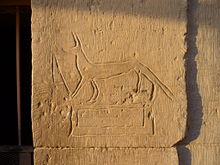
Wikipedia: Graffiti (plural of graffito: "a graffito", but "these graffiti") are writing or drawings that have been scribbled, scratched, or painted illicitly on a wall or other surface, often within public view. Graffiti range from simple written words to elaborate wall paintings, and they have existed since ancient times, with examples dating back to Ancient Egypt, Ancient Greece, and the Roman Empire.
Ancient graffito at Kom Ombo Temple, Egypt
In modern times, paint (particularly spray paint) and marker pens have become the most commonly used graffiti materials. In most countries, marking or painting property without the property owner's permission is considered defacement and vandalism, which is a punishable crime.
New York City Subway trains covered in graffiti (1973)
Graffiti may also express underlying social and political messages and a whole genre of artistic expression is based upon spray paint graffiti styles. Within hip hop culture, graffiti have evolved alongside hip hop music, b-boying, and other elements. Unrelated to hip-hop graffiti, gangs use their own form of graffiti to mark territory or to serve as an indicator of gang-related activities.
Controversies that surround graffiti continue to create disagreement amongst city officials, law enforcement, and writers who wish to display and appreciate work in public locations. There are many different types and styles of graffiti; it is a rapidly developing art form whose value is highly contested and reviled by many authorities while also subject to protection, sometimes within the same jurisdiction.

156. cannot read

éld bele magad a helyzetbe, akkor rájössz, mi hiányzik :)
(a fordítás babakönnyű – azért vigyázz a
„gyorsan”-nál!)


 segítség a nyelvtanhoz:
  * igeidők (videó)
  * képes, tud_mondatok

(http://www.intellectualtakeout.org/blog)
The most frequently referenced definition of “functional literacy” is from UNESCO’s conference in 1978:
“A person is functionally literate who can engage in all those activities in which literacy is required for effective functioning of his group and community and also for enabling him to continue to use reading, writing and calculation for his own and the community’s development.”
The UNESCO definition implies that a functionally literate person possesses a literacy level that equips him or her to flourish in society. A functionally illiterate person, on the other hand, may be able to perform very basic reading and writing, but cannot do so at the level required for many societal activities and jobs...
...Last year, a CNN article also pointed out that there are many college athletes are functionally illiterate. Indeed, it’s been estimated that 19% of high school graduates fall into that category...
...And what is the origin of the statistic that claims 32 million adults in the U.S. are functionally illiterate? It’s based on the National Assessment of Adult Literacy—conducted by the National Center for Education Statistics in 2003—in which a demographically representative population of 19,000 adults were interviewed. According to the findings of the survey, 14% (1 in 7) of adults fell into the category of “Below Basic” in “Prose Literacy,” meaning that they possess “no more than the most simple and concrete literacy skills.” Those who fall into this category are deemed “functionally illiterate.”
An international survey released in 2013 by the Organization for Economic Cooperation and Development yielded similar results for U.S. adults.

155. not filthy

ha ki akarod találni, mi hiányzik, akkor ne tekints el az aktuálpolitikai vonatkozásoktól -- a fordításban pedig semmiképpen ne használd fel így a dőlt betűsöket :)


 segítség a nyelvtanhoz:
  * igeidők (videó)
  * vajon_mondatok

Wiktionary:
not guilty ‎(plural not guilties)
  1. (law) A formal plea by a defendant of not being culpable for the crime with which the defendant is charged.
    If you do not plead, a plea of not guilty will be entered for you.
  2. (law) A verdict or formal finding by the legal system that a defendant is not culpable for the crime with which the defendant was charged.
  3. A member of a jury or tribunal supporting acquittal, or a vote cast in support of acquittal.
  4. A person who has been acquitted of a crime.
Wikipedia:
In legal terms, a plea is simply an answer to a claim made by someone in a criminal case under common law using the adversarial system. Colloquially, a plea has come to mean the assertion by a defendant at arraignment, or otherwise in response to a criminal charge, whether that person pleaded guilty, not guilty, no contest or (in the United States) Alford plea.
The concept of the plea is one of the major differences between criminal procedure under common law and procedure under the civil law system. Under common law, a plea of guilty by the defendant waives trial of the charged offences and the defendant may be sentenced immediately. This produces a system known under American law as plea bargaining.
In civil law jurisdictions, there is generally no concept of a plea of guilty. A confession by the defendant is treated like any other piece of evidence, and a full confession does not prevent a full trial from occurring or relieve the plaintiff(s) from its duty of presenting a case to the trial court.
A "blind plea" is a guilty plea entered with no plea agreement in place. One defendant accused of illegally protesting nuclear power, when asked to enter his plea, stated, "I plead for the beauty that surrounds us"; this type of unorthodox plea is sometimes referred to as a "creative plea," and will usually be interpreted as a plea of not guilty. Likewise, standing mute and refusing to enter any plea at all will usually be interpreted as a not guilty plea; the Federal Rules of Criminal Procedure, for instance, state, "If a defendant refuses to enter a plea or if a defendant organization fails to appear, the court must enter a plea of not guilty."

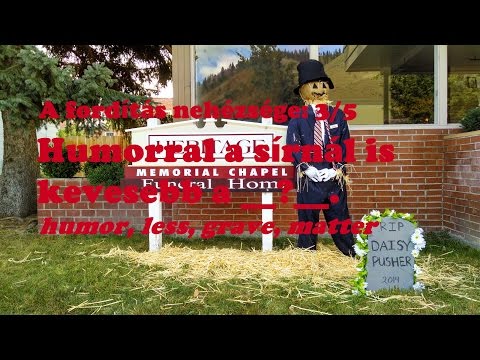
154. with humor

a halottak napjára haladóknak Off Course műfordítás – pótolható-e a hiány szellemesen?
játssz a sírral – a végső megoldás a fordításban is a grave...


http://www.oxfordlearnersdictionaries.com/
be pushing up (the) daisies
(old-fashioned, humorous) to be dead and in a grave

(http://www.urbandictionary.com)
daisy pusher
Too happy all the time and care free. Optimistic. A modern day hippie (minus the drugs)
Wow, she's a real daisy pusher optimist, with that attitude you can wake up on any side of the bed you want.
by LesJacqueline March 29, 2015
Daisy pusher upper
He or she who is pushing up the daisies. Should preferably be used with ´soon-to-be´or ´future´in front of it. Like: you soon-to-be corpse, in other words "you who are about to die"
Do you see that horizontally challenged lady with the microphone, you future daisy pusher upper you? It´s bye bye time. Bang!!!
by The RAB-man March 15, 2011

(The Concise New Partridge Dictionary of Slang and Unconventional English)
push up the daisies; pushing up the daisies to be dead, especially dead and buried; use is occasionally extended to the dying. An image first sketched as dated ‘turn up your toes to the daisies’ in 1842 – from which we derive turn up your toes, (to die). Other variations that have slipped from use: ‘under the daisies’, ‘kick up daisies’ and, less certainly, ‘grin at the daisy-roots’, which may also relate to ‘roots’ (boots) UK, 1918. 

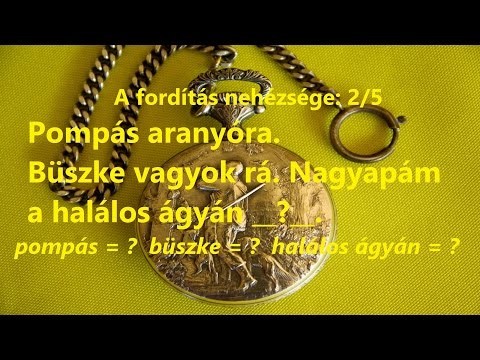
153. pocket watch

ha elárulom, hogy Woody Allen, kitalálhatod a poént... :)
a fordítás meg csak jutifalat, mert tényleg babakönnyű (bár egy bakid lehet!) – neked inkább a szókincs okozhat gondot?


 segítség a nyelvtanhoz:
  * igeidők (videó)

(http://www.imdb.com: Mini Biography By: David McCollum and Michael Castrignano)
Woody Allen was born Allan Stewart Konigsberg on December 1, 1935 in Brooklyn, New York, to Nettie (Cherrie), a bookkeeper, and Martin Konigsberg, a waiter and jewellery engraver. His father was of Russian Jewish descent, and his maternal grandparents were Austrian Jewish immigrants. As a young boy, he became intrigued with magic tricks and playing the clarinet, two hobbies that he continues today. 
Allen broke into show business at 15 years when he started writing jokes for a local paper, receiving $200 a week. He later moved on to write jokes for talk shows but felt that his jokes were being wasted. His agents, Charles Joffe and Jack Rollins, convinced him to start doing stand-up and telling his own jokes. Reluctantly he agreed and, although he initially performed with such fear of the audience that he would cover his ears when they applauded his jokes, he eventually became very successful at stand-up. After performing on stage for a few years, he was approached to write a script forWarren Beatty to star in: Mi újság, cicamica? (1965) and would also have a moderate role as a character in the film. During production, Woody gave himself more and better lines and left Beatty with less compelling dialogue. Beatty inevitably quit the project and was replaced by Peter Sellers, who demanded all the best lines and more screen-time.
It was from this experience that Woody realized that he could not work on a film without complete control over its production. Woody's theoretical directorial debut was in Mi újság, Tiger Lily? (1966); a Japanese spy flick that he dubbed over with his own comedic dialogue about spies searching for the secret recipe for egg salad. His real directorial debut came the next year in the mockumentary Fogd a pénzt és fuss (1969). He has written, directed and, more often than not, starred in about a film a year ever since, while simultaneously writing more than a dozen plays and several books of comedy.
While best known for his romantic comedies Annie Hall (1977) and Manhattan (1979), Woody has made many transitions in his films throughout the years, transitioning from his "early, funny ones" of Banánköztársaság (1971), Szerelem és halál (1975) and Amit tudni akarsz a szexről... (1972); to his more storied and romantic comedies of Annie Hall (1977), Manhattan (1979) and Hannah és nővérei (1986); to the Bergmanesque films of Csillagporos emlékek (1980) and Belső terek (1978); and then on to the more recent, but varied works of Bűnök és vétkek (1989), Férjek és feleségek (1992),Hatalmas Aphrodité (1995), _Celebrity_ and Agyament Harry (1997); and finally to his films of the last decade, which vary from the light comedy of Füles (2006), to the self-destructive darkness of Match Point (2005) and, most recently, to the cinematically beautiful tale of Vicky Cristina Barcelona (2008). Although his stories and style have changed over the years, he is regarded as one of the best filmmakers of our time because of his views on art and his mastery of filmmaking.

152. dead

tudod-e, mitől poén a poén? a fordítás igen könnyű, de fogadjunk,
hogy két helyen is hibázol :(


 segítség a nyelvtanhoz:
  * időegyeztetés (videó)

(www.oxford-royale.co.uk)

8 British Stereotypes and Why They Are (Mostly) Inaccurate
1. We’re all best mates with Prince William
Mention to someone from another country that you’re from Britain, and one of the responses you may encounter is “Do you know Prince William?” And in that question, you might just as well substitute the heir to the British throne with any other member of the Royal Family....
2. We all live in a gloriously idealised London
In the imaginations of many outside the UK, our capital city is the place in which all British people reside – doubtless in residences with views of the Houses of Parliament or Buckingham Palace. At a push, non-Brits may have heard of other major cities such as Oxford or Edinburgh, and maybe Birmingham, but that’s often as far as non-Brit knowledge extends....
3. We all talk like a Cockney or an aristocrat
“Tally ho old sport! I say, isn’t this some ghastly weather we’re having, what?”
“Alright me old geyser?”
These are the two categories of British accent that constitute most non-Brits’ impressions of how we talk here in Britain. Hollywood has done little to dispel this idea of British speech, as this is how we’re depicted in most movies as well...
4. All we ever talk about is the weather
...But talking about the weather fulfils another purpose: it’s a guaranteed topic for small talk, a safeguard we use to avoid those awkward silences that we self-conscious Brits hate...
5. We have a stiff upper lip
The idea of the “stiff upper lip” comes from the fact that a trembling upper lip betrays a lack of control over one’s emotions, and maintaining a stiff upper lip – not showing any emotion – is something that many people thinkcharacterises the Brits...
6. Our food is awful and we can’t produce our own wine
Some countries – dare we say it, France, for example – look down their noses at British food and deride us for our lack of taste....
7. We’re a nation of queuers
Now here is a British stereotype that definitely is true, and we’re very glad about it. We Brits are renowned for forming an orderly queue whenever the need arises. We’re not ones for pushing and shoving; we let fairness rule the day and patiently wait our turn...
8. We complain a lot – but we also say sorry a lot
It’s true: we do complain a lot. We love grumbling to each other about everything from our neighbours to politicians, from energy bills to noisy parties and from the weather being too cold to the weather being too hot. But we’re normally too polite actually to complain to the source of the grievance. In a restaurant, for example, we might privately complain to our dining companion about the standard of the food, but when the waiter comes round to ask us if everything is alright with our meals, most of us will politely tell them how good it is...

nyelvtan frissítés: időegyeztetés


a blogon találsz még több mint 140 jófajta angol idézetet fordítással, nyelvtan-videókkal,
a nyelvtan használatát bemutató kétnyelvű mondattárral, szókártyákkal. sőt, ha lájkolod
az Off Course Angol oldal fészbuk-oldalát, akkor hetente újabb idézetekhez jutsz!
Off Course Angol tanár nélkül -- ahogy még nem csináltad :)


 kapcsolódó nyelvtan:
  * igeidők (videó)
  * függő beszéd_mondatok
  * vajon_mondatok
  * igeidők-2: érdekességek, kivételek_mondatok

IDÉZETEK: 158. president 152. dead 90. at Oxford 86. Irishman 8. bath toys

151. FDR


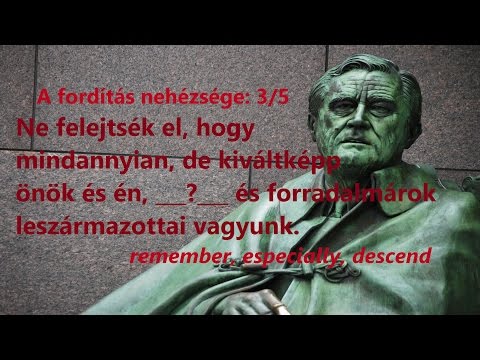
rájössz-e, mivel kérkedett Roosevelt elnök? ha azt hiszed, tudsz már valamennyire angolul, akkor próbáld meg eltalálni, hogy pontosan hogyan – sikerülhet, ha a fordításhoz felhasználod a dőlt betűsöket :)


 segítség a nyelvtanhoz:
  * felszólítás (videó)
  * felszólítás_mondatok
  * igeidők (videó)
  * mindegyik, az összes_mondatok

Wikipedia: ...A majority of polls rank Roosevelt as the second or third greatest president, consistent with other surveys. Roosevelt is the sixth most admired person from the 20th century by U.S. citizens, according to Gallup. Roosevelt was also widely beloved for his role in repealing Prohibition.
The rapid expansion of government programs that occurred during Roosevelt's term redefined the role of the government in the United States, and Roosevelt's advocacy of government social programs was instrumental in redefining liberalism for coming generations.
Roosevelt firmly established the United States' leadership role on the world stage, with his role in shaping and financing World War II. His isolationist critics faded away, and even the Republicans joined in his overall policies. After his death, his widow continued to be a forceful presence in US and world politics, serving as delegate to the conference which established the United Nations and championing civil rights and liberalism generally. Many members of his administration played leading roles in the administrations of Truman, Kennedy and Johnson, each of whom embraced Roosevelt's political legacy.
Reflecting on Roosevelt's presidency, "which brought the United States through the Great Depression and World War II to a prosperous future", said FDR's biographer Jean Edward Smith in 2007, "He lifted himself from a wheelchair to lift the nation from its knees."...

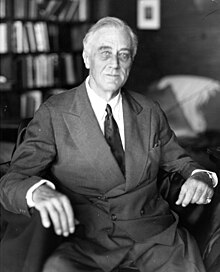
Last photograph of Roosevelt, taken the day before his death (April 11, 1945)

...Roosevelt is the only President of the United States to serve more than two terms in office; in 1947, the 22nd Amendment limiting Presidential terms was ratified by the states.

150. good for evil

fontos életvezetési hasznosság – rájössz, hogyan szóljon?
egyébként: a fordítás a lényeg, középfokon :)


 segítség a nyelvtanhoz:
  * kell, tilos_mondatok
  * talán, bizonyára_mondatok

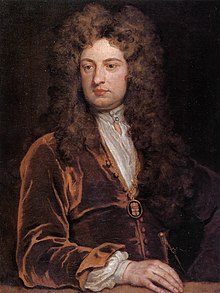
Wikipedia: Sir John Vanbrugh (24 January 1664 (baptised) – 26 March 1726) was an English architect and dramatist, perhaps best known as the designer of Blenheim Palace and Castle Howard. He wrote two argumentative and outspoken Restoration comedies, The Relapse (1696) and The Provoked Wife (1697), which have become enduring stage favourites but originally occasioned much controversy. He was knighted in 1714.


Godfrey Kneller's Kit-cat portrait, held in the National Portrait Gallery (United Kingdom)

Vanbrugh was in many senses a radical throughout his life. As a young man and a committed Whig, he was part of the scheme to overthrow James II, put William III on the throne and protect English parliamentary democracy, and he was imprisoned by the French as a political prisoner. In his career as a playwright, he offended many sections of Restoration and 18th century society, not only by the sexual explicitness of his plays, but also by their messages in defence of women's rights in marriage. He was attacked on both counts, and was one of the prime targets of Jeremy Collier's Short View of the Immorality and Profaneness of the English Stage. In his architectural career, he created what came to be known as English Baroque. His architectural work was as bold and daring as his early political activism and marriage-themed plays, and jarred conservative opinions on the subject...
...Vanbrugh is remembered today for his vast contribution to British culture, theatre, and architecture...
...After Vanbrugh's death Abel Evans suggested this as his epitaph:
   Under this stone, reader, survey
   Dead Sir John Vanbrugh's house of clay.
   Lie heavy on him, Earth! For he
   Laid many heavy loads on thee!
Vanbrugh was buried in the church of St Stephen Walbrook in the City of London, but his grave is unmarked and the above epitaph is as yet unused.

149. press

beugratós... rájössz-e, mi hiányzik, vagy mégse?
a fordítást viszont (hiába saccolod magad haladónak), egyáltalán nem biztos, hogy elegánsan meg tudod oldani, próbálkozz – használd fel a dőlt betűst :)


 segítség a nyelvtanhoz:
  * igeidők (videó)
  * vonatkozó mellékmondatok_mondatok

(https://freedomhouse.org/)


148. privacy


felkérésre készült darab, aktuálpolitikai tartalmával új íz az Off Course Angol eddigi stílusához képest – de itt is jól megkapod a lehetőséget, hogy fordítást, angol nyelvtant gyakorolj :)
az első idézet a Miniszterelnöki Kabinetiroda válasza a Népszabadságnak egy magánember ügyében, a másodikban Rogán Antal nem magán.


 segítség a nyelvtanhoz:
  * igeidők (videó)
  * no vagy not_mondatok
  * to + főnévi igenév_mondatok

147. adult movies


felkérésre készült darab, aktuális tartalmával új íz az Off Course Angol eddigi stílusához képest – de itt is jól megkapod a lehetőséget, hogy fordítást, angol nyelvtant gyakorolj :)
az első idézet a Gépbér Színpad kft. közleménye, miután kiderült, hogy pornófilmet vetítettek ki az új MTK-stadion eredményjelzőire, a második az Off Course Angol erekciója


 segítség a nyelvtanhoz:
  * igeidők (videó)
  * vonatkozó mellékmondatok_mondatok

146. on camera


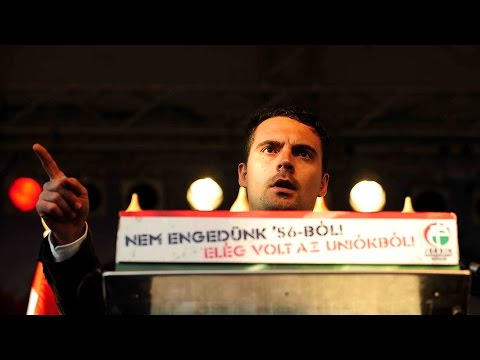
felkérésre készült darab, aktuális politikai tartalmával új íz az Off Course Angol eddigi stílusához képest – de itt is jól megkapod a lehetőséget, hogy fordítást, angol nyelvtant gyakorolj :)

az első idézet Orbán Viktor szösszenete, amikor úgy megmondja Vona Gábornak,
hogy az Off Course Angol adja a másikat...


 segítség a nyelvtanhoz:
  * igeidők (videó)
  * to + főnévi igenév_mondatok

145. love music

ha mindenről az jut eszedbe, nem fogod kitalálni, melyik három szó hiányzik. a fordítás pihekönnyű – tudod kapásból a dőlt betűset “angolosan”?...


 Segítség a nyelvtanhoz:
  * felszólítás (videó)
  * felszólítás_mondatok
  * jelentésfüggő folyamatostalanság_mondatok

(http://www.nytimes.com/1996/01/05)
Evan Esar, who devoted his life to writing and compiling books of humor, died on Dec. 9 at his home in suburban Los Angeles, friends reported last week.
Mr. Esar, who lived in New York for most of his life, was 96 and lived in Laguna Hills, Calif., at his death.
As a young man, he made money by writing articles about oddities, and in the 1930's, he turned to humor, writing, editing and compiling books of jokes and humor. In an interview, he once classified himself as a humorologist.
His books included "Esar's Comic Dictionary" (1943), "Esar's Joke Dictionary" (1945), "The Animal Joker" (1946), "The Dictionary of Humorous Quotations" (1949), "The Humor of Humor" (1952), "Humorous English" (1961) and "The Comic Encyclopedia" (1978).
"I am not interested in dull stuff like the psychology of laughter," he said in a 1945 interview. "I am interested in classifying humor, in the nature and evolution of humor. I am a man of science."
He identified the five main categories of humor as wordplay (including puns), caricature (exaggeration, insult), blunders (mistaken identity, malapropisms), wit (hoaxes, repartee) and nonsense (doubletalk, limericks). And, he said, they sometimes overlapped.
Mr. Esar laid claim to a humor library of 2,000 books, and given his exposure to such quantities of this material, it was not surprising that he said: "It is very rarely that I ever hear a joke I haven't heard before. After a drink or two, when in a light mood, I can laugh, though. I build up a tactful enjoyment."
In 1949, Charles Poore of The New York Times said that Mr. Esar's "Dictionary of Humorous Quotations" was "one of the wisest and wittiest books of the year." It compiled such quotations as these:
Rebecca West: "He is every other inch a gentleman."
George Jean Nathan: "He writes his plays for the ages -- the ages between 5 and 12."
Oscar Wilde: "He had the sort of face that, once seen, is never remembered."
La Rochefoucauld: "We think few people sensible except those who agree with us."
Robert Hutchins: "Whenever I feel like exercising, I lie down till the feeling passes."
Mr. Esar left little public record of his early life. Christopher C. Nielsen of Mission Viejo, Calif., who befriended the writer and his wife in their final years, said he understood that Mr. Esar was born on July 2, 1899, on a New Jersey farm, the son of immigrants from Russia.
Mr. Nielsen said he believed that the child was named Esar Levine and that the family moved to New York two or three years later. Mr. Esar spoke of having a witty grandfather and loving silly rhymes and jokes, which he said he would write down.
Mr. Esar's wife, the former Cece Silverman, who was known as Patsy, died last June. Mr. Esar left no immediate family.

7. wonderful evening

poénosak ezek az igeidők, ha érted, mire gondolok... ha pedig érted, akkor nyilván simán le is tudod fordítani...? (például hogy oldanád meg a dőlt betűst?...)


  Segítség a nyelvtanhoz:
  * igeidők (videó)

www.biography.com
Comedian, actor, singer and writer Groucho Marx was born Julius Henry Marx on October 2, 1890, in New York City. Groucho Marx spent nearly seven decades making people laugh with his snappy one-liners and sharp wit. He once described his comedy as "the type of humor that made people laugh at themselves."
While he originally aspired to be a doctor, Marx started his career as a singer. One of his earliest efforts proved to be disastrous, however. As part of the Le May Trio, Marx got stuck in Colorado for a while after another group member took off with his pay. He had to work at a grocery store to earn enough money to make it back to New York.
Marx's father Samuel never had much success as a tailor, and the family struggled financially. His mother Minnie hoped that she might find prosperity through her five children. She became the quintessential "stage mother," guiding her children's theatrical acts and even performing herself. The act eventually featured Groucho and his brothers Leonard, Adolph and Milton... 

The Marx Brothers in 1931 (from top, Chico, Harpo, Groucho, and Zeppo)

...The Marx Brothers had a career breakthrough in 1914 while performing in Texas. During a show, some of the audience left to go see a runaway mule. When they returned, the Marx Brothers put aside their usual routines to make fun of the audience. Groucho's quick-witted quips won over the crowd. The switch to comedy proved to be their ticket to success.
By the 1920s, the Marx Brothers had become a hugely popular theatrical act. Groucho had developed some of his trademarks by this time. He often wore a long coat, a painted-on mustache, thick glasses and held on to a cigar on stage. In addition to just liking cigars, Marx explained that they proved useful, too. He said that "if you forget a line, all you have to do is stick the cigar in your mouth and puff on it until you think of what you've forgotten."...

nyelvtan frissítés: felszólítás


 kapcsolódó nyelvtan:
  * felszólítás_mondatok
  * hagy, hadd_mondatok
  * becsomagoljam? (videó)
  * becsomagoljam?_mondatok
  * ugye? (videó)
  * ugye?_mondatok

IDÉZETEK: 198. cigarette 197. gentlemen 187. vote 151. FDR 145. love music 144. very busy 140. quick temper 139. animals 132. the lights  124. citizens 114. the right  112. Mr Ali 106. how much 80. unlucky 73. stay long  60. Mr Pougnet 55. God bless 33. Acutely positive thinking: facts 31. unlucky 30. save 17. beaten up 14. tell me

144. very busy

Off Course Angol megosztja egy emlékét: Dorothy Parker revisited :)
rávágod-e, melyik az a durva szó, amelyiktől robban a poén?
a fordítás is csak a szókincs miatt okozhat gondot...


 Segítség a nyelvtanhoz:

  * igeidők (videó)
  * felszólítás (videó)
  * felszólítás_mondatok
  * eléggé és túl_mondatok


www.biography.com
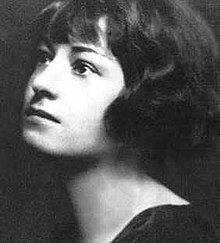
...Dorothy Parker was the sharpest wit of the Algonquin Round Table, as well as a master of short fiction and a blacklisted screenwriter.
In addition to her writing, Dorothy Parker was a noted member of the New York literary scene in 1920s. She formed a group called the Algonquin Round Table with writer Robert Benchley and playwright Robert Sherwood. This artistic crowd also included such members as The New Yorker founder Harold Ross, comedian Harpo Marx, and playwright Edna Ferber among others. The group took its name from its hangout—the Algonquin Hotel, but also also known as the Vicious Circle for the number of cutting remarks made by its members and their habit of engaging in sharp-tongued banter. 
www.theparisreview.org
(excerpt from an interview with Dorothy Parker by Marion Capron)
...INTERVIEWER: That’s not showing much respect for your fellow women, at least not the writers.
PARKER: As artists they’re not, but as providers they’re oil wells; they gush. Norris said she never wrote a story unless it was fun to do. I understand Ferber whistles at her typewriter. And there was that poor sucker Flaubert rolling around on his floor for three days looking for the right word. I’m a feminist, and God knows I’m loyal to my sex, and you must remember that from my very early days, when this city was scarcely safe from buffaloes, I was in the struggle for equal rights for women. But when we paraded through the catcalls of men and when we chained ourselves to lampposts to try to get our equality—dear child, we didn’t foresee those female writers. Or Clare Boothe Luce, or Perle Mesta, or Oveta Culp Hobby.
INTERVIEWER: You have an extensive reputation as a wit. Has this interfered, do you think, with your acceptance as a serious writer?
PARKER: I don’t want to be classed as a humorist. It makes me feel guilty. I’ve never read a good tough quotable female humorist, and I never was one myself. I couldn’t do it. A “smartcracker” they called me, and that makes me sick and unhappy. There’s a hell of a distance between wisecracking and wit. Wit has truth in it; wisecracking is simply calisthenics with words. I didn’t mind so much when they were good, but for a long time anything that was called a crack was attributed to me—and then they got the shaggy dogs...

143. Gospel


nem, ezt nem egy magyar politikus, nem bevándorlás témában, és nem most mondta. nem tudod, melyik szó hiányzik kétszer is?... ha láttad a nyelvtani segítséget, akkor nem nehéz
a fordítás, ha nem, akkor igen.


 segítség a nyelvtanhoz:
  * vagy... vagy, sem... sem..._mondatok

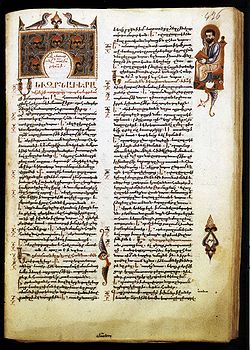
Wikipedia: A gospel is an account describing the life, death, and resurrection of Jesus of Nazareth. The most widely known examples are the four canonical gospels of Matthew, Mark, Luke, and John which are included in the New Testament, but the term can also used to refer to apocryphal, non-canonical, Jewish–Christian and gnostic gospels.

The first page of the Gospel of Mark inArmenian, by Sargis Pitsak, 14th century.

Etymology
The word gospel derives from the Old English gōd-spell (rarely godspel), meaning "good news" or "glad tidings", and is a calque (word-for-word translation) of the Greek word εὐαγγέλιον, euangelion (eu- "good", -angelion "message") or in Aramaic ewang'eliyawn). The gospel was considered the "good news" of the coming Kingdom of Messiah, and of redemption through the life and death and resurrection of Jesus, the central Christian message. The Greek word euangelion is also the source (via Latinised evangelium) of the terms "evangelist" and "evangelism" in English. The authors of the four canonical Christian gospels are known as the Four Evangelists.
Islamic view
The Injil (Arabic: إنجيل‎‎) is the Arabic name for what Muslims believe to be the original gospel of Jesus. This Injil is one of the Islamic Holy Books the Qur'an records as revealed by God, the others being the Scrolls of Abraham, the Scrolls of Moses, the Tawrat (the Torah), the Zabur (the Psalms), and the Qur'an.

142. less or more

a magyar ember olyan, hogy kapásból tudja, mi hiányzik neki itt :)
a fordítás meg nem ügy, ugye? hogy mondanád a dőlt betűsöket?...


  Segítség a nyelvtanhoz:
  * vagy... vagy, sem... sem..._mondatok
  * to + főnévi igenév_mondatok
  * összehasonlítás és fokozás_mondatok

(http://www.transparency.org/)
First launched in 1995, the Corruption Perception Index has been widely credited with putting the issue of corruption on the international policy agenda.
What does a number mean to you? Each year we score countries on how corrupt their public sectors are seen to be. Our Corruption Perceptions Index sends a powerful message and governments have been forced to take notice and act.
Behind these numbers is the daily reality for people living in these countries. The index cannot capture the individual frustration of this reality, but it does capture the informed views of analysts, businesspeople and experts in countries around the world.
Based on expert opinion, the Corruption Perceptions Index measures the perceived levels of public sector corruption worldwide.
The scale of the issue is huge. Sixty-eight per cent of countries worldwide have a serious corruption problem. Half of the G20 are among them.

Not one single country, anywhere in the world, is corruption-free.